Why Is My Patio Furniture Rust So Quickly?
On this page (3 sections)
Your patio furniture rusts so quickly because it’s constantly exposed to moisture and oxygen, which are the main ingredients for rust. This chemical reaction, called oxidation, turns your beautiful metal furniture into that familiar reddish-brown mess. Poor quality materials or an inadequate protective finish also speed up this process, leaving your outdoor space looking less inviting.
You probably invested in patio furniture to enjoy your outdoor living area, not to constantly battle corrosion, right? We understand the frustration of seeing your chairs and tables degrade faster than you’d expect. Many experts say that even small scratches can break through protective layers, exposing the metal beneath to the elements and accelerating rust formation.
- Rust occurs from metal’s exposure to moisture and oxygen.
- Poor finishes and material quality make rust worse.
- Even tiny scratches can lead to rust spots.
- Climate plays a big role in how fast rust appears.
Let’s dive into why your patio furniture is rusting so quickly and what you can do about it.
Understanding Why Your Patio Furniture Rusts So Quickly
Your patio furniture rusts quickly because of constant exposure to moisture and oxygen, combined with the type and quality of the metal and its protective finish.
The Science Behind the Rust: Oxidation Explained
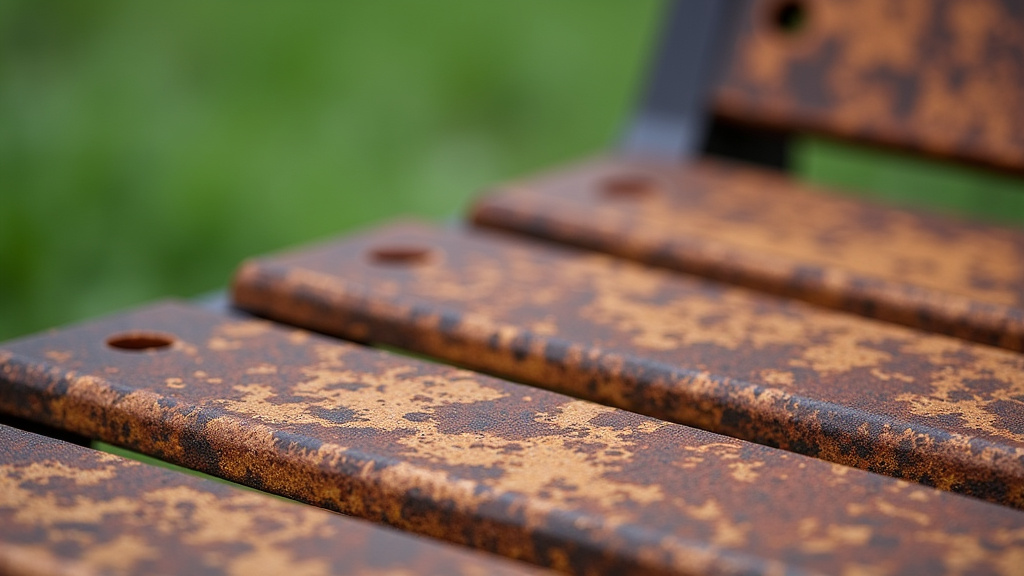
Rust is like a slow-motion fire for metal. It’s a chemical reaction called oxidation. When iron or steel, common materials in patio furniture, meet oxygen and water, they form iron oxides. That’s the reddish-brown flake you see.
Think of it as a hungry monster. Oxygen and water are its favorite snacks. The more access it has, the faster it eats away at your furniture. You can’t stop this process entirely, but you can certainly slow it down.
This reaction creates a new, less stable material. It weakens the metal. This is why rusted furniture can become brittle and even break over time. It’s not just an aesthetic issue; it’s a structural one too.
Environmental Factors That Speed Up Rust
Your local environment plays a huge role in how fast rust appears. Some places are just rust magnets.
Humidity and Rainfall
High humidity means more moisture in the air. Even without direct rain, this moisture can settle on your furniture. If you live in a region with frequent rain or morning dew, your furniture faces a constant battle.
Imagine leaving a wet sponge on a metal surface. That’s what high humidity can feel like to your furniture. It never truly dries out, creating the perfect conditions for oxidation.
Coastal Living and Salt Air
If you live near the ocean, you know the struggle. Salt is a powerful accelerator for rust. It acts like a catalyst, making the oxidation process happen much faster.
Sea spray carries tiny salt particles onto your furniture. These particles attract and hold moisture, concentrating it on the metal. This combination of salt and water is particularly corrosive (National Institute of Standards and Technology).
Temperature Fluctuations
Rapid changes in temperature can also play a part. When temperatures drop, moisture can condense on surfaces. When they rise, this moisture can evaporate, leaving behind minerals and salts that can further corrode the metal.
This cycle of wetting and drying, especially with temperature shifts, keeps the metal interacting with water. It’s a subtle but constant assault on your furniture’s protective layers.
The Role of Material Quality and Construction
Not all metal furniture is created equal. The type of metal and how it’s treated makes a big difference in its rust resistance.
Types of Metal and Their Rusting Potential
Here’s a quick look at common metals in patio furniture and their susceptibility to rust:
| Metal Type | Rust Potential | Notes |
|---|---|---|
| Wrought Iron | High | Very prone to rust if not well-protected. |
| Steel | High | Needs strong protective coatings. |
| Aluminum | Very Low | Doesn’t rust, but can corrode (white powder). |
| Stainless Steel | Low | Resistant due to chromium, but not rust-proof. |
As you can see, wrought iron and steel are your biggest rust concerns. Aluminum is fantastic because it doesn’t rust, though it can get a dull white powder if exposed to certain chemicals or salts. Stainless steel is good but not invincible.
Poor Protective Coatings
Most metal patio furniture comes with some sort of protective finish. This could be paint, powder coating, or galvanization. This coating is your furniture’s first line of defense against rust.
If this coating is thin, applied improperly, or of poor quality, it won’t last. It will chip, peel, or wear away quickly. Once the bare metal is exposed, it’s game over for rust protection.
Many experts say that a good powder coat is tough, but even the best ones can fail. If the surface wasn’t prepped correctly before coating, adhesion can be poor, leading to early peeling. This exposes the metal underneath.
Wear and Tear: Damaging Your Furniture’s Defenses
Even well-made furniture can rust if its defenses are breached. Everyday use and accidents can create openings for rust to begin.
Scratches and Chips
You know that tiny scratch on your car? It’s similar for patio furniture. A small scratch, chip, or ding can break through the protective coating. This exposes the raw metal to moisture and oxygen.
Even if the scratch is tiny, rust can start there and spread. It’s like a small crack in a dam; eventually, it can lead to a bigger problem. Pay attention to these minor imperfections.
Impact Damage
Dropping a heavy item, bumping the furniture during moving, or even strong winds causing objects to strike it can cause impact damage. This creates dents and can crack or chip the protective coating.
These areas become prime targets for rust. The metal is deformed, and its protective barrier is broken. It’s often where you’ll see the first signs of corrosion. Be mindful of how you handle and store your furniture.
Maintenance and Care: Are You Helping or Hurting?
Your habits around furniture care also play a significant role. Sometimes, what you don’t do is just as important as what you do.
Infrequent Cleaning
Dirt, dust, and grime aren’t just ugly; they can trap moisture against your furniture’s surface. Pollen, leaves, and even bird droppings can hold water and create a micro-environment for rust.
Regular cleaning removes these moisture-trapping elements. A simple wipe-down can make a world of difference. It’s about preventing water from sitting in contact with the metal for too long.
Neglecting Small Rust Spots
When you see a small rust spot, do you ignore it? Many of us do. But rust loves company. A small spot can quickly grow and spread if left untreated.
It’s like a tiny spark in a forest. If you don’t put it out, it can become a raging wildfire. Treating rust early is one of the most effective ways to prevent major damage.
Improper Storage During Off-Season
Leaving your patio furniture exposed to the elements all year, especially in harsh winters or rainy seasons, is a guaranteed way to speed up rust. Even if it’s “weatherproof,” it still benefits from protection.
Storing your furniture indoors or under a good cover removes it from constant exposure to moisture, temperature extremes, and corrosive agents. This can significantly extend its life.
Here’s a quick checklist to help you identify if your care routine might be contributing to rust:
- Do you leave furniture uncovered in rain or snow?
- Do you rarely clean accumulated dirt or leaves from surfaces?
- Do you ignore small scratches or rust spots when they appear?
- Is your furniture near sprinklers that constantly spray it?
- Do you live in a coastal area and rarely rinse off salt spray?
- Is your furniture stored in a damp or humid area during the off-season?
Conclusion
Understanding why your patio furniture rusts so quickly boils down to a few key factors: constant moisture and oxygen exposure, the type of metal, and the quality of its protective coating. You’ve learned that environmental conditions like humidity, salt air, and even minor scratches can undermine your furniture’s defenses. But don’t despair! You can significantly slow down this process. Now that you know the culprits, you’re ready to take proactive steps to protect your investment and enjoy your outdoor space for years to come.
Frequently Asked Questions
Is it possible to completely prevent patio furniture from rusting?
Completely preventing rust on metal patio furniture is extremely difficult due to the presence of oxygen and moisture in the environment. However, you can significantly slow down and minimize rust formation through proper care, material choice, and protective measures. To learn more about specific material care, our guide on how to protect wrought iron patio furniture provides detailed steps.
Does covering patio furniture really make a difference for rust prevention?
Yes, covering your patio furniture is one of the most effective ways to prevent rust. Covers protect furniture from direct rain, snow, humidity, and even airborne corrosive elements like salt spray, keeping the metal drier and reducing oxidation.
What’s the best way to clean my patio furniture to avoid rust?
Regularly clean your furniture with mild soap and water to remove dirt, pollen, and debris that can trap moisture. Make sure to rinse thoroughly and dry the furniture completely after cleaning to prevent water from lingering on surfaces.
Can I repair rusted patio furniture, or do I need to replace it?
For small, surface rust spots, you can often sand them down, clean the area, and then apply a rust-inhibiting primer and paint. For extensive or structural rust, replacement might be the safer and more durable option to ensure the furniture’s integrity.
Are there specific types of paint or coatings that are best for rust prevention?
Look for paints and coatings specifically designed for outdoor metal and rust inhibition. Rust-Oleum, for example, offers products formulated to stop and prevent rust. Powder coating is also a durable option, but ensure the surface is properly prepped before application.