Which Type of Patio Heater Should You Choose?
The best patio heater type depends on your patio, fuel access and preferred heat pattern: choose electric for simple spot heating, propane for broad outdoor warmth, or a fire pit for group seating and flame ambiance.
On this page (12 sections)
- Which patio heater types are available?
- How does an electric infrared patio heater work?
- When is a propane tower patio heater the better choice?
- Is a tabletop patio heater right for a small patio?
- When is a propane fire pit the better patio heater type?
- Should you choose a pellet patio heater?
- How should you match patio heater types to your seating?
- What should you check before buying a patio heater?
- Which patio heater type is best for a covered patio?
- How can you choose between the 3 examples?
- More guides on this topic
- What is the best type of patio heater for your patio?
The best patio heater type depends on your patio, fuel access and preferred heat pattern. Choose electric for simple spot heating, propane for broad outdoor warmth, or a fire pit when group seating and a visible flame matter most.
Start with the space you want to warm. A person sitting near a wall needs a different heater from a dining table, open deck or circle of guests.
Your choice also affects setup and safety. Check the fuel source, clearance requirements, ventilation and local rules before you place any heater.
For a wider look at patio heaters, compare the heater's job with the way you use your outdoor space.
Which patio heater types are available?
The main patio heater types are electric infrared heaters, propane tower heaters, tabletop heaters and propane fire pits. Each creates a different balance of heat direction, coverage, portability and ambiance.
| Heater type | Best match | Main trade-off |
|---|---|---|
| Electric infrared | A nearby chair or sheltered seating area with an outlet | Needs electrical access and may heat a more focused zone |
| Propane tower | An open patio with several seats around one heater | Needs a propane tank and outdoor placement |
| Tabletop propane | A small table or compact seating area | Provides a smaller heating zone than a full-size tower |
| Propane fire pit | Group seating around a central flame | Adds fire ambiance but is not the same as directional overhead heat |
| Pellet fire pit | Buyers who prefer pellet fuel and a fire-pit format | Requires pellet fuel and a suitable outdoor setup |
The right type is not simply the one with the highest heat output. A heater that points warmth toward your seating can be more useful than a stronger model placed too far away or in the wrong direction.
How does an electric infrared patio heater work?
An electric infrared patio heater warms nearby people and surfaces with radiant heat instead of burning fuel. It needs a suitable electrical outlet and should be used only in the environment allowed by its instructions.
Radiant heat can feel direct because it does not depend only on warming the air around you. This makes the format useful when you want one seating area to feel warmer without arranging a large fuel appliance.
Electric heaters also avoid storing or changing propane tanks. Their limits are the available outlet, the heater's wattage and the distance between the heater and the people you want to warm.
Who should choose an electric patio heater?
Choose electric when your seating area is close to a suitable outlet and you want a straightforward heater for a defined zone. It can suit a covered outdoor area only when the specific model and placement meet the required conditions.
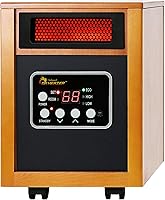
The DR-968 is a freestanding cabinet heater with caster wheels. It weighs 19 lb, measures 13 in D x 11 in W x 16 in H, uses 12.5 amps and has a 72-in power cord.
Its electronic thermostat ranges from 50 to 85 °F. The heater also has high and low settings, a 12-hour automatic shut-off timer, tip-over protection, overheat protection and an infrared remote control.
The 5200 BTU heat output and stated 576-square-foot coverage describe the heater's rated indoor use. Its indoor rating matters here, so don't assume this portable electric heater is suitable for an exposed patio.
Choose it when your intended space matches its indoor use and electrical needs. For safety questions about bringing patio heaters into enclosed areas, read can patio heaters be used indoors.
When is a propane tower patio heater the better choice?
A propane tower heater suits an open outdoor seating area where you want warmth around several nearby seats without running an electrical cord. It needs a 20 lb liquid propane tank and a stable placement away from combustible materials.
Propane towers commonly send heat across a wider area than a small tabletop unit. Their height can also place the heat source above the seating zone, which may work well around a patio table.
You still need to plan for the tank and the heater's footprint. A tall heater can be harder to store than a compact electric model, and the open-air location must meet the manufacturer's clearance instructions.
Who should choose a full-size propane patio heater?
Choose a full-size propane heater when your patio has room for a standalone tower and you want heat for a wider seating area. It is a practical fit for outdoor dining, entertaining or a patio where an outlet is not convenient.
The Amazon Basics heater measures 32.12 in D x 32.12 in W x 91.3 in H and has a Havana Bronze powder-coated finish. It has one-touch ignition, an adjustable temperature knob and wheels for moving it into place.
Its tilt safety auto-shut-off valve is designed to stop the heater if it tips. The water box adds weight to the base, while the chain helps secure the 20 lb propane tank.
The heater is rated for outdoor use and requires a 20 lb liquid propane tank, which is not included. Its 46,000 BTU output and 324-square-foot heating coverage make it the broadest direct patio-heater format among these 3 examples.
Choose it for an open patio with enough room around a tall standalone appliance. If your patio has a roof or low ceiling, compare the required clearances before choosing this type.
Is a tabletop patio heater right for a small patio?
A tabletop patio heater can suit a compact seating area when you want warmth close to a table. It takes less floor space than a full tower, but its heating zone is usually more limited.
This type works best when the people using the patio sit close together. Measure the table and surrounding chairs first, then check that the heater will not interfere with plates, drinks or movement.
A tabletop model can be easier to move and store than a tall tower. Its smaller size does not remove the need for safe fuel handling, stable placement and proper outdoor ventilation.
When should you choose a tabletop propane heater?
Choose tabletop propane when your seating is arranged around one small table and you want heat near the center. It may be a better match than a tower when floor space is tight.
Use the heater's approved fuel, clearances and operating location as the deciding limits. Never treat a compact size as permission to use it indoors or under an unsuitable cover.
For more focused options, compare our guide to the best tabletop heater for patio.
When is a propane fire pit the better patio heater type?
A propane fire pit suits group seating where the flame itself is part of the experience. It creates central warmth and evening ambiance, but it does not replace a directional heater for warming one chair or a covered dining area.
Fire pits need an outdoor location with room around the flame. You must also account for the tank, hose, burner, nearby furniture and any local fire restrictions.
A propane fire pit can be easier to use than a wood fire because it avoids ash and firewood. It still produces an open flame, so safe placement and supervision remain essential.
Who should choose a portable propane fire pit?
Choose a portable propane fire pit when you want a central campfire-style experience for outdoor gatherings. It suits patios, camping areas and other approved outdoor settings where a fire pit is allowed.
The Outland Living Firebowl measures 24 in D x 24 in W x 13 in H and weighs 34 lb. It has a black alloy steel and stainless steel construction, a stainless steel burner and manual ignition.
The fire pit includes a 4.4 lb natural lava rock set, a propane tank stabilizer ring, a pre-attached 10-ft hose with regulator and a UV and weather-resistant cover. The standard 20 lb propane tank is not included.
Its 58,000 BTU output is higher than the listed outputs of the 2 heater examples here, but output alone does not make it the best choice for every patio. The central flame is useful for group seating, while a tower or infrared heater may better suit people who want directed warmth.
The unit is for outside use. Check current fire restrictions in your area before use, even though the fire pit is described as CSA approved and designed for use during most campfire bans.
Should you choose a pellet patio heater?
Choose a pellet patio heater only when you want the fire-pit style of heat and are prepared to store and feed pellet fuel. Pellet models can fit buyers who prefer solid fuel over propane, but they need a suitable outdoor setup and regular fuel handling.
Pellet fire pits are different from electric and propane heaters because the fire is central rather than directed at one person. They also create a different setup routine, so check ignition, feeding, ash handling and storage requirements for the exact model.
A pellet format may suit a patio built around gathering rather than quick spot heating. Compare the fuel routine with propane before choosing it.
Read our guide to the best pellet patio heater if pellet fuel matches the way you plan to use the patio.
How should you match patio heater types to your seating?
Match the heater to the distance and arrangement of the people you want to warm. Spot heating, broad seating coverage and central fire ambiance are 3 different goals.
Use these questions to narrow the choice:
- Do you have a suitable electrical outlet near the seating?
- Is the patio open, covered or enclosed?
- Will one person sit near the heater, or will several people sit around it?
- Do you want directed radiant warmth or a central flame?
- Can you store and replace a propane tank safely?
- Are fire pits or propane appliances restricted where you live?
- Do you have enough clearance from walls, ceilings, furniture and plants?
An electric infrared model can fit one nearby seating zone when the electrical setup is suitable. A propane tower can work better when several seats need warmth across an open area.
A fire pit makes more sense when conversation and a visible flame are central to the plan. It may be the wrong choice when you need heat aimed at one chair or when an open flame is not allowed.
Before arranging the heater, use our guide on how does a patio heater work to compare radiant and fuel-burning heat in plain terms.
What should you check before buying a patio heater?
Check fuel, placement, heat direction, controls, movement and storage before you choose a patio heater type. These details affect daily use more than a heat-output number alone.
Fuel and power
Electric models need a suitable outlet and enough circuit capacity for their wattage. Propane models need the correct tank, safe storage and a location with the ventilation required for outdoor gas use.
Heat pattern
Radiant electric heat can focus on a nearby zone. A tall propane heater can spread warmth around an open seating area, while a fire pit sends heat outward from a central flame.
Size and movement
Measure the heater's footprint and the route to its storage location. Wheels can help with moving a tower heater, but you still need a stable operating position.
Controls and shutoffs
Look for controls that match how often you adjust the heat. Safety features such as tip-over or tilt shutoff can help reduce risk, but they do not replace stable placement and supervision.
Cover and storage
Protect outdoor equipment according to its instructions. A cover can help keep a fire pit protected when it is not in use, but the unit should be cool and safely shut down before covering or storing it.
Which patio heater type is best for a covered patio?
The best heater for a covered patio is the model whose instructions allow that placement and whose clearances fit the roof, walls and nearby materials. A covered patio is not automatically safe for every electric, propane or fire-pit heater.
Measure the ceiling height and the open space around the heater. Check for combustible siding, curtains, branches, furniture and decorations before you choose.
A covered space may also limit ventilation. Read the model's instructions and local rules instead of assuming that a roof makes an outdoor heater suitable for enclosed use.
For more placement guidance, see best heater for covered patio.
How can you choose between the 3 examples?
Choose the DR-968 for a defined indoor electric heating zone, the Amazon Basics tower for broad outdoor propane warmth, or the Outland Living Firebowl for central outdoor flame ambiance.
The DR-968 is the most compact example and the only one here rated for indoor use. Its 1500-watt electric system, caster wheels and thermostat suit a buyer who has the right outlet and wants focused warmth.
The Amazon Basics heater is the tallest example, with a 91.3-in height, wheels, 46,000 BTU output and stated 18-ft diameter coverage. It suits an open patio where a propane tank and tall standalone heater are practical.
The Outland Living Firebowl is the shortest and widest example, with a 24-in round shape and 58,000 BTU output. It suits group seating that benefits from a central flame, lava rock and a portable fire-pit format.
For another product comparison, see best patio heater with light if lighting is part of your evening patio plan. You can also compare our Best Patio Heater guide after you narrow down the heater type.
More guides on this topic
- Best Patio Heaters with Tables
What is the best type of patio heater for your patio?
Choose electric infrared when you have an approved outlet and want focused warmth. Choose a propane tower for a broad open seating area, a tabletop propane heater for a compact table, or a propane fire pit when group seating and a visible flame matter most.
The right patio heater types are defined by use, not by output alone. Match the fuel, heat pattern, clearance and storage needs to your patio before comparing individual models.
If your patio furniture layout is changing too, use How To Choose Outdoor Patio Furniture? to plan the seating distance and walking space around the heater. A good layout leaves room for warmth without placing people or furniture too close to the heat source.
Frequently asked questions
What is the best type of patio heater?
The best type of patio heater depends on your space and fuel access. Electric infrared heaters suit sheltered areas with an outlet, propane tower heaters spread warmth across an outdoor seating area, and propane fire pits suit groups that want heat with a visible flame.
Are electric or propane patio heaters better?
Electric and propane heaters suit different patios. Electric models avoid fuel tanks and produce targeted radiant heat, while propane models can work where an outlet is not convenient and often provide broader outdoor coverage.
Check placement, ventilation and local safety rules before choosing.
Can you use a patio heater under a covered patio?
Some heaters can work under a covered patio, but the correct choice depends on the model's clearance and indoor or outdoor rating. Measure the ceiling height, keep combustible materials away and follow the manual.
Read our covered-patio heater guide before installing one.
Do patio heaters use a lot of electricity?
Electric patio heater use depends on wattage and runtime. A 1500-watt heater draws more power while running than a lower-wattage model, so compare the heater's wattage with the hours you plan to use it.
An outlet and circuit must also support the load.