How Does a Patio Heater Work?
A patio heater warms people mainly with infrared radiation from an electric heating element or gas burner. The heat reaches nearby surfaces and bodies directly, so wind, distance, and placement affect how warm you feel.
On this page (9 sections)
- How does a patio heater create warmth?
- How does infrared patio heat reach you?
- How does a propane patio heater work?
- How does an electric patio heater work?
- Is a fire pit the same as a patio heater?
- Do patio heaters work in cold weather?
- Can you use a patio heater indoors?
- How should you choose a patio heater?
- What is the simple answer to how patio heaters work?
A patio heater warms people mainly with infrared radiation from an electric heating element or gas burner. The heat reaches nearby bodies and surfaces directly, so distance, wind, and placement affect how warm you feel.
Unlike a central heater, a patio heater does not need to warm every cubic foot of outdoor air. It creates a warmer zone around the heater, which is why it works best for a table, seating area, porch, or covered patio.
For a broader look at choosing patio heaters, compare the fuel, shape, heating area, and safety requirements before you buy.
How does a patio heater create warmth?
A patio heater creates warmth by turning electricity or fuel into heat and directing that heat toward an outdoor sitting area. Electric models use a heating element, while propane models burn gas in a burner assembly.
The warm feeling usually comes from infrared energy, sometimes called radiant heat. Infrared energy travels outward until it reaches a person, chair, wall, or other surface.
That surface absorbs some of the energy and becomes warmer. The surrounding air may then warm slightly, but the heater's main benefit comes from direct heat rather than from raising the temperature of the whole outdoor space.
How does infrared patio heat reach you?
Infrared patio heat travels in a mostly straight path from the heating element or burner to nearby people and objects. You feel more warmth when you are in front of the heater's output and less when furniture, walls, or other objects block the path.
Distance matters because the energy spreads over a larger area as it moves away. A heater may feel strong close to the seating area but weak at the edge of a large patio.
Wind also changes the experience. Infrared energy still travels outward, but moving air can carry away warmed air and reduce the comfort you get from nearby heated surfaces.
The most useful patio heater types include freestanding propane towers, tabletop units, wall-mounted electric models, and ceiling-mounted electric heaters. For warmth mounted to an umbrella, compare patio umbrella heaters.
Each places the heat in a different position, so the best choice depends on your seating layout.
Do patio heaters work better near people?
Patio heaters work better when they are placed close enough for direct radiant heat to reach the seating area. You still need the clearances, mounting rules, and placement limits in the heater's instructions.
A heater aimed across an open yard may waste much of its useful warmth. A heater positioned beside or above a seating group can create a more focused comfort zone.
Measure the area where people actually sit. A compact patio may need controlled, close-range warmth, while a larger open space may need more than one heating point.
How does a propane patio heater work?
A propane patio heater works by sending liquid propane from a tank through a regulator and into a burner. The burner produces heat, and a reflector or heating head directs much of that warmth downward and outward.
The flame itself is not the only source of useful heat. The burner and nearby metal parts become hot, and the reflector helps send radiant energy toward the people below.
Propane models need an outdoor fuel supply and open-air ventilation. They also need stable placement, safe clearance from combustible materials, and protection from tipping or damage.
The Amazon Basics 46,000 BTU Portable Outdoor Propane Patio Heater is a tall, standalone model with wheels, a one-touch ignition button, an adjustable temperature knob, and a powder-coated Havana Bronze finish. Its water box weighs down the base, and its tilt safety auto-shut-off valve is designed to stop operation if the heater tips.
This model is listed for heating up to an 18 ft diameter and has dimensions of 32.12 x 32.12 x 91.3 inches. It requires a 20 lb liquid propane tank, which is not included, so plan for both the tank and the heater's clearance area.
Choose a tall propane heater when warmth needs to reach several seats around a patio table. Skip this style if you lack room for a large tower or cannot keep a propane tank and heater in an approved outdoor location.
How does an electric patio heater work?
An electric patio heater sends current through a heating element, which becomes hot and releases radiant energy. Many electric models use infrared heating, so they can warm people directly without burning fuel.
Electric heat avoids storing or burning propane, but it still needs a suitable power connection and safe placement. Outdoor electrical use also requires attention to moisture, cords, outlets, and the model's instructions.
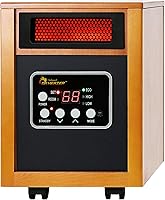
The DR. INFRARED HEATER Dr Infrared Heater DR-968 Portable uses a dual heating system with an infrared quartz tube and PTC.
It has a 1,500-watt output, 12.5 amp draw, a 72-inch power cord, a 50 to 85°F thermostat range, caster wheels, tip-over protection, overheat protection, and a 12-hour automatic shut-off timer.
This 19 lb cabinet-style heater is designed for indoor use and measures 13 x 11 x 16 inches. Its indoor rating means you should not assume it is suitable for an uncovered patio, damp area, or outdoor extension-cord setup.
Choose it when you need portable electric warmth indoors and can use a compatible outlet. For an outdoor patio, choose a model specifically rated for outdoor use and follow its electrical and weather instructions.
Is a fire pit the same as a patio heater?
A fire pit is not the same as a patio heater, even though both can make an outdoor sitting area feel warmer. A patio heater directs heat toward people from a burner or element, while a fire pit creates warmth around an open or contained flame.
Fire pits can offer a wider social heat pattern for people sitting around them. They also need rules for fuel, clearance, flame control, surface placement, and local fire restrictions.
The Outland Living Firebowl Smokeless Fire Pit is a round, 24-inch outdoor propane fire pit with a 58,000 BTU output. It has a 10 ft hose and regulator, adjustable flame control, a natural lava rock set, a propane tank stabilizer ring, and a UV and weather resistant cover.
This 34 lb black fire pit measures 24 x 24 x 13 inches and uses a standard 20 lb propane tank that is not included. It has no assembly required, but you still need to follow local fire restrictions and keep the unit outdoors as directed.
Choose a fire pit when the flame and group seating arrangement matter as much as direct heat. Choose a patio heater when you want warmth directed from above or from one side without placing a flame at the center of the seating group.
Do patio heaters work in cold weather?
Patio heaters do work in cold weather, but they provide a local warm zone rather than whole-patio heating. The colder, windier, and more open the area, the harder it is to maintain comfort.
Use the heater where people gather instead of trying to heat unused space. A roof, wall, wind screen, or covered patio can reduce moving air and help the radiant warmth feel more consistent.
Keep coats, cushions, curtains, plants, and other combustible materials away from hot parts. Never cover a heater while it is operating, and allow it to cool before storage or cleaning.
For a heater that adds another function, see the guide to the best patio heater with light. If you need a surface for drinks or snacks, compare the best patio heater with table.
Can you use a patio heater indoors?
You generally cannot use an outdoor patio heater indoors because an enclosed room changes the ventilation and clearance risks. Propane combustion can create dangerous gases indoors, while outdoor electric models may not have the right protection for indoor or damp conditions.
Check the exact model instructions before use. Our guide to can patio heaters be used indoors explains why the fuel type, rating, ventilation, and clearance rules matter.
Never bring a propane fire pit into a house, garage, tent, or enclosed porch. A product described for outside use should remain outside unless the manufacturer specifically approves another setting.
How should you choose a patio heater?
Choose a patio heater by matching fuel, seating layout, wind exposure, and available space. Start with where people sit, then decide whether direct overhead heat, side heat, or a central fire feature suits that space.
A tall propane model can serve several seats around an open patio. An electric infrared model can suit a smaller area when an approved outdoor power connection is available.
Check the heater's stated outdoor use, clearances, stability features, fuel needs, and controls. Measure the height and floor area before ordering, especially for a tall tower or a crowded balcony.
For more comparisons, see Best Patio Heater, Best Patio Heater For Small Patios, and best fire sense patio heater.
What is the simple answer to how patio heaters work?
How does a patio heater work? It turns electricity or fuel into radiant heat and directs that energy toward nearby people and surfaces.
The warmth feels strongest at a suitable distance, with a clear path between the heater and the seating area.
Pick a propane tower if you need outdoor heat around several seats. Pick an electric model only when its use rating and power setup match the space, and choose a fire pit when shared flame and group seating are part of the goal.
Sources and safety checks
Follow the exact heater manual for fuel, clearance, ventilation, storage, and cleaning instructions. The [U.S.
Consumer Product Safety Commission's patio heater safety guidance](https://www.cpsc.gov/s3fs-public/portable-heater-safety.pdf) also covers safe placement and operation of portable heaters.
Frequently asked questions
Do patio heaters work in cold weather?
Yes, patio heaters can provide useful warmth in cold weather, but they do not heat an entire open area like an indoor furnace. Radiant heat works best when you sit within the heater's useful range and block wind with walls, screens, or other shelter.
Do patio heaters work in the wind?
Patio heaters work less effectively in strong wind because moving air carries warmth away and can affect a gas flame. Place the heater where its instructions allow, avoid exposed high-wind locations, and never use a patio heater in an enclosed area unless it is specifically approved for that space.
Are patio heaters radiant or convection heaters?
Most outdoor patio heaters are primarily radiant heaters. They send infrared energy toward people and nearby surfaces, while some warmth also moves through the air by convection.
Radiant heat is useful outdoors because it does not need to warm all the surrounding air first.
Can you use a patio heater indoors?
Do not move an outdoor patio heater indoors unless the exact model is approved for indoor use. Gas heaters can create combustion hazards in enclosed spaces, and outdoor electrical models may have different moisture and clearance requirements.
Check the manual and local safety rules first.