Shade and Privacy: The Complete Buying Guide
Outdoor curtains are the simplest way to add adjustable shade and privacy to a patio, porch, deck, gazebo or pergola. Choose the fabric, size, hanging system and tiebacks around your space, weather and daily use.
On this page (12 sections)
- What do outdoor curtains do?
- How do you measure for outdoor curtains?
- Which outdoor curtain fabric is best?
- How do you choose outdoor curtains for a patio?
- Which outdoor curtains work for decks, gazebos and pergolas?
- Which curtain hardware should you use?
- How do you stop outdoor curtains from blowing?
- What other shade and privacy options should you compare?
- What size patio umbrella should you choose?
- How should you care for outdoor curtains?
- How do you install outdoor curtains safely?
- How do you choose the right outdoor curtain system?
Outdoor curtains are the simplest way to add shade and privacy to a patio, porch, deck, gazebo or pergola. They let you close off one side when the sun is low or neighbors are nearby, then open the space when you want more airflow and visibility.
The right setup depends on four measurements: the opening width, the available height, the curtain's finished size and the space needed for the rod or track. Fabric, water resistance, hanging hardware and wind control matter just as much.
This guide covers how to plan outdoor curtains, compare fabrics, choose hardware and use related shade options.
What do outdoor curtains do?
Outdoor curtains provide adjustable shade and privacy without permanently closing the patio. They can soften direct sun, divide an outdoor room and reduce the view through an open railing or frame.
They work best when you want control over one or more sides of the space. Curtains can close a porch opening in the afternoon, shield a seating area from a neighboring yard or create a visual divider around a gazebo.
They do not function like a solid wall. Wind can move the fabric, rain can enter around the edges and sunlight can still pass through lighter colors or open gaps.
For a more fixed barrier, compare outdoor privacy screen materials.
Use curtains as one layer in a shade plan. For overhead coverage, compare best shade sails for decks.
A roof, awning, umbrella or shade sail handles overhead sun, while curtains handle side light and privacy. For visibility after dark, plan LED patio lighting alongside the shade.
For a shade sail installation, compare shade sail hardware kits.
How do you measure for outdoor curtains?
Measure the opening width, mounting height and floor clearance before choosing a panel size. Do not measure only the area you want the fabric to cover.
Start with the width between posts, walls or railing supports. If the curtain will sit outside the opening, measure the full area you want covered and include overlap at the sides.
Next, measure from the rod or track position to the point where you want the curtain to end. The finished length should clear the floor, deck boards or patio surface enough to avoid dragging, unless you are choosing a deliberate puddled look.
If you are changing the deck surface, account for interlocking deck tiles when checking the curtain's finished clearance.
Account for the hardware. Grommets, tab tops, clips and tracks place the fabric at different distances below the support.
A rod mounted above the opening also changes the finished drop.
For width, add fullness rather than stretching one flat panel across the entire opening. Extra fabric creates folds when closed and gives you some overlap between panels.
A 52 in wide panel can cover a narrow section, but the number of panels depends on the opening. Two 52 in panels provide 104 in of total fabric before accounting for folds and overlap.
What curtain width should you use?
Use the opening width as the starting measurement, then add fabric for folds and overlap. A curtain that exactly matches the opening may look flat and leave gaps when moved.
For a simple divider, divide the opening into two panels so you can open from the middle. For a narrow side opening, one panel may be easier to operate.
If the opening is wide, several panels can reduce the weight on each hanging point. More panels also make it easier to close only the section facing the sun or the neighbors.
How long should patio curtains be?
Choose a length that reaches the planned lower edge without dragging. Curtains that end above the floor are easier to keep clean, while curtains that nearly touch the surface can give a more enclosed look.
Check the support height before choosing a length. An 84 in curtain may fit a tall frame but hang too low from a short rod.
A shorter panel may leave an unwanted gap below a low mounting point.
Outdoor surfaces are not always level. If the patio slopes, measure from the rod to several points along the floor and use the clearance at the lowest point.
Which outdoor curtain fabric is best?
The best outdoor curtain fabric is one that matches your main need: waterproofing, shade, airflow, appearance or easy care. Polyester is common because it can be woven into heavier panels and treated for water and sunlight.
Thicker fabric can block more direct light and give stronger visual privacy. It can also hold more heat and place more load on the rod, clips or track.
Lighter fabric allows more airflow and daylight. It may feel less enclosed but can provide less shade and privacy, especially in bright conditions.
Dark colors generally reduce visible light more than pale colors, but they can also absorb more sunlight. The right color depends on whether you want a darker retreat or a brighter outdoor room.
Are waterproof outdoor curtains worth it?
Waterproof outdoor curtains make sense when rain splash, damp air or occasional showers are part of the problem. They can help water bead or run off the fabric, but they do not seal the opening.
Look for the fabric type, treatment, care instructions and hanging design. Grommets, tabs and seams still need to stay in good condition.
Leave enough space for the curtain to dry rather than keeping wet fabric tightly bunched.
For a focused comparison, see our guide to best outdoor curtains waterproof.
Which outdoor curtains block the most sun?
Choose a thicker, darker or blackout-style outdoor curtain when your main goal is reducing direct sun. The exact result depends on color, fabric density, opening direction and gaps around the panel.
A curtain can block the sun entering from the side while leaving overhead sunlight exposed. If the roof or top of the patio is open, combine the curtain with an umbrella, awning or shade sail.
The DIVA EN CAMINO DEC option uses triple-weave 100% polyester fabric, a super waterproof coating on both sides and a blackout opacity description. Its darker colors are intended to block more light, while lighter colors allow more natural light.
How do you choose outdoor curtains for a patio?
Choose patio curtains by matching the opening, sunlight direction, weather exposure and hardware. A curtain for a covered porch does not need the same setup as one facing open wind and rain.
For a covered patio, focus on finished size, privacy and simple operation. For an exposed patio, give more attention to drying, secure attachment and how the fabric behaves when the wind rises.
The best outdoor curtains for patio use should fit the frame without blocking doors or creating a trip hazard. Measure each opening separately if the posts or ceiling heights differ.
Use this best outdoor curtains for patio guide when you want product options organized around common patio layouts.
Should outdoor curtains be waterproof or breathable?
Choose waterproof fabric when rain splash and damp conditions are more important than airflow. Choose a lighter or more open design when ventilation and a less enclosed feel matter more.
A waterproof panel may still leave gaps at the sides and bottom. It can reduce direct exposure without keeping the whole patio dry.
If your seating area becomes hot when closed, use curtains in shorter sections or open the panels on the side opposite the sun. Tiebacks can hold the fabric away from the seating area when privacy is not needed.
Which outdoor curtains work for decks, gazebos and pergolas?
The best curtain type depends on the structure's posts, roof height and available mounting points. Decks often need privacy along railings, gazebos need panels between posts and pergolas may need hardware attached to open beams.
For a deck, measure between posts and check whether the curtain will interfere with stairs, railings or a door. Our best outdoor curtains for deck guide focuses on those layout limits.
For a gazebo, match the panel length to the openings between the posts. If the hardtop needs replacing, compare hardtop gazebo replacement roofs.
A curtain that reaches the floor can create a more enclosed room, but it also needs more care around moisture and dirt.
See best curtains for outdoor gazebo for gazebo-focused choices.
Pergolas often have open sides and beams that can accept a rod, track or cable system. Check the beam spacing and the path of the curtain before selecting panels.
Our best outdoor pergola curtains guide covers this structure.
Are vinyl curtains useful outdoors?
Vinyl curtains can suit buyers who want a more rigid barrier against splashes, drafts or wind-driven moisture. They may feel less like indoor drapes and can require more careful mounting.
Consider the opening, storage plan and temperature changes before choosing vinyl. The material can change the look and feel of an outdoor room, so it is best for a specific weather-control need rather than decoration alone.
Compare options in best outdoor vinyl curtain.
Do bamboo curtains work for shade and privacy?
Bamboo curtains can add filtered shade and a natural look, but their slatted design may allow more light and airflow than a solid fabric panel. They suit spaces where you want visual separation without a fully enclosed feeling.
Measure the width and drop, then check how the curtain will roll, fold or tie when open. Keep the operating path clear of furniture and outdoor cooking equipment.
See best bamboo curtains outdoor for bamboo-focused options.
What curtains suit a porch?
Porch curtains should fit the openings without blocking steps, doors or railings. A porch often benefits from panels that can be opened quickly when weather changes.
Check the distance between the support and the floor, as well as the space behind the curtain. A panel that brushes the porch surface can collect dirt and moisture.
For porch layouts, see best outdoor curtains for porch.
Which curtain hardware should you use?
Choose the hardware based on how often you will move the curtain and what the structure can support. Rods are simple for straight openings, tracks work well for frequent movement and clips help with flexible cable or wire systems.
The rod diameter must fit the grommets, tabs or rings. Measure the opening and the mounting points before choosing a rod length.
Are outdoor curtain rods the best choice?
Outdoor curtain rods suit straight openings where you want a familiar sliding motion. Use brackets that match the structure and place supports close enough to prevent sagging.
Allow room for the curtain to stack at the side when open. If the opening is wider than the rod, a center support or track may provide better control.
Our best outdoor curtain rods guide compares rod-focused options.
The DIVA EN CAMINO DEC curtains have grommets with a 1.6 in inner diameter, so the rod must fit inside that opening. The curtain set includes 2 panels, each 52 in wide and 84 in long.
When should you use an outdoor curtain track?
Choose a track when you want the curtain to move smoothly across a wide opening or around a defined path. Tracks can work well on pergolas, gazebos and covered patios where a rod would need several brackets.
Check the track's shape, mounting surface and curtain attachment method. The track should not force the fabric into a sharp bend that makes opening difficult.
See best outdoor curtain track for track-based setups.
Are curtain clips useful outdoors?
Curtain clips are useful when the fabric does not have a matching grommet or tab system. They can attach panels to a taut wire, cable or another hanging support, depending on the setup.
The Teenitor clips are 0.75 in long and 0.35 in wide. They are made from 430 stainless steel with a black coating and come in a 100-piece pack.
Small clips can be tight when first opened, so work carefully around the fabric. Check the clip size against the curtain edge and support before hanging a full panel.
For more options, see best outdoor curtain clips.
Do outdoor curtains need hooks or clips?
Hooks or clips make sense when the curtain's top edge does not match the rod or track. They can also make removal easier when you need to wash or store the panels.
Use enough attachment points to keep the top edge supported without stretching the fabric between clips. A clip that grips well can still damage a thin edge if the panel is pulled hard.
Choose attachments that match the curtain weight and the expected wind. Open or secure the curtains during severe weather rather than relying on small hardware alone.
How do you stop outdoor curtains from blowing?
The most reliable approach is to combine proper attachment with a bottom restraint or tieback. A heavy panel may move less than a light one, but wind can still lift or twist it.
Use a bottom weight when you want the curtain to hang in place while closed. Use a tieback when you want to hold the panel against a post when open.
Do not trap a curtain tightly against a structure if it is wet. Give it room to dry, and remove or store it when strong weather is expected.
Are weighted bottoms worth choosing?
Weighted bottoms can help reduce movement along the lower edge. They are useful when the curtain should stay near the floor or opening rather than swinging freely.
A weight does not make the whole curtain windproof. The top attachment, fabric strength, frame and weather conditions still control how the panel behaves.
See best outdoor curtains with weighted bottom and best weights for outdoor curtains for options focused on lower-edge control.
Should outdoor curtains have top and bottom grommets?
Top and bottom grommets can help when you want attachment points at both edges. This setup may keep a panel flatter against a frame, but it also requires matching supports at the top and bottom.
Measure the full opening before choosing this style. The lower attachment should not create a trip point or prevent the fabric from being moved during bad weather.
Compare the idea in best outdoor curtains with top and bottom grommets.
Do tiebacks help with outdoor privacy curtains?
Tiebacks help you control where the curtain sits when it is open. They can keep fabric away from seating, a doorway or a cooking area, then release it when you need shade or privacy.
The Porlau tiebacks use cotton rope, wooden beads and built-in magnets. The set described here has a 20.2 in total length, 1.3 in wide wooden beads and 4 pieces in black.
Magnetic tiebacks are convenient for frequent adjustment, but the curtain and tieback still need to suit the wind. Use the tieback as a positioning aid, not as a guarantee against strong weather.
See best outdoor curtain tie backs for more styles.
What other shade and privacy options should you compare?
Compare outdoor curtains with privacy screens, roller shades, shade sails, awnings, gazebos and screen enclosures. Each option controls a different part of the outdoor environment.
Curtains are flexible and easy to open, but they move in wind. Fixed screens and hardtop structures are more permanent, while roller shades and awnings can provide controlled coverage from above or along one side.
When should you choose a privacy screen?
Choose a privacy screen when you want a more fixed visual barrier that does not need to be opened and closed often. Screens can be useful along a property line, railing or exposed side of a patio.
Measure the screen's footprint and check how it will stand in wind. A screen can be easier to place than a curtain system, but it may take more floor space.
See best outdoor patio privacy screens.
Are outdoor roller shades better than curtains?
Outdoor roller shades suit buyers who want a compact shade layer that rolls up when not in use. They can provide a cleaner vertical profile, while curtains offer softer folds and easier side-to-side movement.
Compare the mounting surface, operating clearance and desired coverage. A roller shade may need a precise installation position, while a curtain can often be shifted along a rod or track.
See best outdoor roller shades for patio.
What is the best material for a shade sail?
The best shade sail material depends on whether you want filtered shade, water resistance, airflow or a fixed installation. Measure the anchor points and leave room for the fabric to tension correctly.
A shade sail controls overhead sun, so it pairs well with curtains that handle side glare and privacy. It does not close the sides of the patio.
Our guide explains best material for shade sail.
When should you choose a retractable patio awning?
Choose a retractable awning when overhead shade is the main need and you want to open or close the coverage. It can cover a seating area more broadly than a single curtain panel.
Check wall strength, projection, opening clearance and the space needed when retracted. An awning does not provide the same side privacy as curtains.
See best retractable patio awnings.
Is a hardtop gazebo better than curtains?
A hardtop gazebo provides a more permanent structure for shade and weather separation. Curtains can then close the sides when you need privacy or added protection.
Measure the available footprint, roof clearance and assembly route before choosing a kit. A hardtop gazebo needs a suitable location and stable installation.
Compare options in best outdoor hardtop gazebo.
When do you need a patio screen enclosure?
A screen enclosure suits buyers who want more continuous insect control and a defined outdoor room. It is a larger commitment than hanging curtains and usually requires more planning.
Check the enclosure's dimensions, attachment points and access. Curtains can still be useful inside an enclosure for added shade or privacy.
See best patio screen enclosures.
What size patio umbrella should you choose?
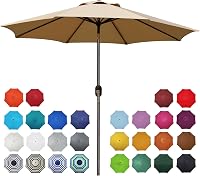
The right patio umbrella size depends on the table, chairs, open clearance and amount of shade you want. A larger table usually needs a larger canopy, but the umbrella must also fit the patio without hitting walls, branches or roof edges.
A small bistro table may need about 6 to 7 ft of canopy. A larger dining table often needs about 9 to 11 ft, depending on the chair layout and the umbrella design.
Measure the table's width and length, then include the chairs pulled out for use. The canopy should shade the seating area without creating a blocked walkway.
For a full sizing method, read What Size Patio Umbrella Do I Need?.
What size umbrella works for a 6-person table?
A 9 to 11 ft umbrella often suits a 6-person table, but the table shape and chair placement matter. A rectangular table may need an umbrella that covers its length, while a round table can work with a centered canopy.
Check the pole location and base size before choosing. A center pole may interfere with seating, and a larger canopy needs a stable base and enough clearance.
See What Is the Best Umbrella Size for a 6 Person Table?.
How should you care for outdoor curtains?
Care for outdoor curtains by keeping them dry when possible, following the stated washing method and checking the hardware regularly. Dirt, moisture and trapped leaves can shorten the useful life of fabric and attachments.
Shake or brush off loose dirt before washing. Do not store wet curtains in a closed bin, because trapped moisture can cause odors or damage.
Inspect grommets, tabs, clips, rods and tracks at the start and end of the season. Replace a bent or corroded attachment before it pulls on the fabric.
The NICETOWN curtains use detachable tab tops, fit rods under 1.9 in in diameter and are machine washable below 86°F with mild detergent and no bleach. Low-temperature ironing is listed for care.
The detachable tabs can make seasonal removal easier because the curtain can come off without taking down the rod. Check the tab attachment after repeated use and keep the fabric from dragging on rough surfaces.
How do you install outdoor curtains safely?
Install outdoor curtains by mounting the support to a sound structure, checking the full travel path and testing the closed and open positions before final use. The hardware must suit the frame, curtain weight and local weather.
Mark the rod, track, cable or clip locations before drilling or fastening. Check that doors, windows, lights and fans can still operate.
Hang one panel first and move it from closed to open. Look for snags, rubbing points and contact with the floor.
Once the system works, add the remaining panels and set the tieback positions. Leave enough slack for normal movement, but avoid fabric hanging into a walkway or near a grill.
Should you remove outdoor curtains during storms?
Remove, open or secure outdoor curtains when strong wind or severe weather is expected. The safest choice depends on the frame, fabric, attachment method and forecast.
Do not assume waterproof fabric or stainless steel clips makes the entire system storm safe. A panel can act like a sail and transfer force to the rod, track or structure.
Store clean, dry curtains in a breathable location when the season ends. Label panels by opening if several have similar sizes.
How do you choose the right outdoor curtain system?
Choose the system by matching the main problem to the simplest useful solution. Use fabric curtains for flexible side shade and privacy, a rod for a straight opening, a track for frequent movement and clips for adaptable attachment.
Pick thicker waterproof or blackout-style panels when side sun and privacy are the priority. Pick lighter panels when airflow and daylight matter more.
Choose weights or tiebacks when movement is the problem. Choose a screen, awning, shade sail, gazebo or enclosure when the structure needs more fixed coverage than curtains can provide.
For most buyers, the best first step is to measure the opening, decide how many panels you need and identify where the sun and neighbors affect the space. Then select the fabric and hardware that fit those measurements.
Outdoor curtains work best when they are treated as part of a complete shade plan. Pair side curtains with the right overhead option, keep the fabric dry and open or secure the system before severe weather.
Frequently asked questions
What are outdoor curtains used for?
Outdoor curtains add shade, privacy and some wind control around patios, porches, decks, gazebos and pergolas. They can divide an outdoor room, reduce direct sunlight and make seating feel more private, but they do not replace a solid wall or guarantee protection from rain and strong wind.
What size outdoor curtains do I need?
Measure the opening's width and height, then choose panels that cover the opening with extra width for overlap and fullness. Check the curtain's finished length, hanging clearance and rod position before ordering.
A 52 in wide panel is a useful reference, but your opening determines how many panels you need.
Are waterproof outdoor curtains fully waterproof?
Water-resistant or waterproof outdoor curtains can help shed water, but they do not create a sealed room. Wind can drive rain around the edges, water can enter through gaps, and seams or hardware still need care.
Use the curtains as a shade and privacy layer, not as a substitute for an enclosure.
How do I keep outdoor curtains from blowing?
Use a bottom weight, tieback, clip or another restraint that suits the curtain and frame. Keep the curtain moving freely when wind rises, and open or secure it during strong weather.
Heavy fabric alone does not guarantee that a panel will stay in place.
What size patio umbrella do I need?
Choose the umbrella size from the table and chair footprint, not the table alone. A 6 to 8 ft umbrella can suit a small table, while a 9 to 11 ft umbrella usually covers a larger dining setup.
Measure the open area, allow clearance around the edge and confirm the base or mounting system.