How to String Outdoor Lights on a Deck
To string outdoor lights on a deck, map the rail and overhead runs first, then mount hooks or clips at even points and hang the strand with light sag. Connect strands end to end only within the stated limit, keep plugs off the floor, and test before final fixes.
On this page (10 sections)
- How do you plan the route for stringing lights on a deck?
- Which mounts work best on rails, posts, and beams?
- How do you set spacing and bulb height on a deck?
- How do you hang a strand overhead without too much sag?
- How do you connect strands and reach an outlet?
- Which strand suits a small rail run?
- Which strand suits a wide overhead span?
- How do you replace bulbs and fix a dark socket?
- How do you keep the setup safe in wet weather?
- How do you pick between the three options here?
To string outdoor lights on a deck, plan the route, pick supports, hang the strand with slight sag, and connect it to power last. This order keeps the run even and stops you from fixing a strand that is too short or too long.
Start by marking where the lights should go. Most decks look best with a run along the outer rail, a second run across a corner, or a zigzag overhead pattern.
Walk the deck and note posts, beams, pergola corners, and the nearest outdoor outlet. If you need freestanding supports, see how to string lights on poles.
For buying options, compare outdoor string light poles. Our guide to led patio lights explains bulb shape, warm color, and plug-in layouts, and Best Outdoor String Lights covers general strand types before you measure.
How do you plan the route for stringing lights on a deck?
Measure each straight span, add sag between supports, and keep the outlet at one end. That plan tells you how many strands you need and where the plugs will land.
Use a tape to mark post to post distances. Add about 6 to 12 inches per span for sag.
Note doors, stairs, and seating so the strand does not cross a walk path at head height.
Choose a simple route first. A rail perimeter suits small decks.
A zigzag overhead suits open decks with posts or beams. A corner to corner span suits a pergola or a single shade sail point.
Keep the run in one direction where you can. That makes the end plug easy to find and avoids a loose connector in the middle of a span.
If power must come from the house, start at that wall and work outward.
Which mounts work best on rails, posts, and beams?
Use cup hooks, clamp clips, or cable ties matched to the support you have. The mount should hold the cord without pinching it or leaving sharp edges in contact.
Screw-in cup hooks work on wood posts and beams. Clamp clips suit metal or composite rails where you do not want to drill.
Cable ties suit fence lines and pergola slats, but do not pull them so tight that the cord bends at a socket.
Space mounts at even points, then hang the strand loose for a test. If a span sags more than planned, add a support in the middle.
If the strand pulls straight, your sag allowance was too small.
Brightown is made for this kind of fix, since Brightown says it installs with a cable tie or cup hook on a fence, pergola, or railing.
How do you set spacing and bulb height on a deck?
Keep bulbs at the same height and use strand spacing as your guide. Uneven height makes a deck look messy even when mounts are secure.
Brightown has 12 sockets with 24 inch spacing. Addlon has 15 sockets spaced 3.11 ft apart.
Wider spacing suits an overhead zigzag. Closer spacing suits a rail line.
Hang the cord first, then check bulb drop. Bulbs should hang a few inches below the cord, not twist sideways.
If a bulb points the wrong way, turn the socket.
For a warm look, compare best outdoor string lights white before you pick a color. Brightown and FLSNT bulbs use 2200K warm white.
Addlon uses 2700K warm white.
How do you hang a strand overhead without too much sag?
Hang overhead strands in a zigzag, with a support at each turn. A straight line across a wide deck will sag in the middle if the strand is long.
Start at a post or beam, run to a far support, then turn back at an angle. That zigzag spreads the light and cuts the effective span.
Keep the low point above head height, with extra room over chairs and umbrellas.
If you have no posts, add removable poles or use a pergola, fence, or house wall. Do not tie the strand to a tree limb or a loose rail cap that can shift in wind.
How to string outdoor lights on deck in a zigzag pattern
Mark the turn points, mount hooks at each turn, then hang strand by strand. Test each leg before you move to the next.
Lay the strand on the deck first to check length. Raise one end, hook it, then walk the strand to the next point.
Keep the sag in the middle of each leg, not at the hook.
If a leg is short, do not stretch it. Use a different support or add a strand at a joint.
A stretched leg will pull on sockets and can loosen a bulb over time.
How do you connect strands and reach an outlet?
Connect end to end only within the maker limit, then run the first plug to a weather rated outlet. Keep connectors off the deck floor where water can sit.
Brightown says end to end connection supports up to 60 strands. Addlon says up to 28 strands.
Those limits differ, so use the limit for the strand you own. For most decks, two or three strands are enough.
Place the start of the run near the outlet. If the outlet is far, use a short outdoor rated extension cord and keep its plug raised off the floor.
Avoid daisy chaining long extension cords across walk paths.
For timer control, check best outdoor string lights with timer. An outdoor smart plug can also provide scheduled control.
Which strand suits a small rail run?
Pick a shorter strand with closer spacing for a small rail run. You want enough bulbs to read as a line, without extra cord at the end.
Brightown is 29 ft, with 12 shatterproof plastic bulbs plus 1 spare. Each bulb is a 1.5 inch G40 shape with an E12 base, 1W LED, and 2200K warm white.
Lifespan reaches 20,000 plus hours.
That size suits a deck rail, fence line, or small pergola edge. The 24 inch spacing keeps the glow even on a short span.
The plug in design gives steady light without solar charging delays, and it is not solar or battery powered.
Brightown says the cord is IP65 weatherproof and UL588 certified for outdoor use. It also includes a built in spare fuse.
Those details matter on a deck that sees rain and cold.
Which strand suits a wide overhead span?
Pick a longer strand with wider spacing for overhead spans. A long strand cuts connector count and keeps the zigzag even.
Addlon is 48 ft, with 15 vintage style sockets spaced 3.11 ft apart. It uses shatterproof E17 LED Edison bulbs and a 2700K warm white color.
The maker says it is ETL listed and commercial grade, with dual parallel wiring.
The strand includes ties and instructions, and the maker says it installs with built in hooks, guide wires, nails, or zip ties. It connects up to 28 strands for large areas.
Dimmer use is possible, but the dimmer switch is not included.
Addlon suits a deck with posts, a pergola, or a cafe style zigzag. The wider spacing means fewer bulbs per foot, so check your span count before you buy.
If you want more bulbs per foot, a closer spacing strand may suit you better.
How do you replace bulbs and fix a dark socket?
Cut power first, then tighten the bulb, swap a spare, or replace the bulb if the socket stays dark. A single bad bulb should not kill the whole strand on these designs.
Brightown says a single bulb burnout will not affect the whole string, and the bulbs are replaceable. Addlon advises tightening the bulb by 1 to 2 more turns, then replacing it if it still does not light.
Addlon also offers a one year replacement service.
Keep spare bulbs on hand. FLSNT sells a 15 pack of S14 LED replacement bulbs with an E26 base, 2200K warm white, and plastic construction.
The bulbs are shatterproof and waterproof.
Note the base size before you stock spares. Brightown uses E12.
FLSNT uses E26. Addlon uses E17.
How do you keep the setup safe in wet weather?
Keep plugs raised, connectors covered, and bulbs clear of sprinklers and pooling water. Weather rated parts still need smart placement.
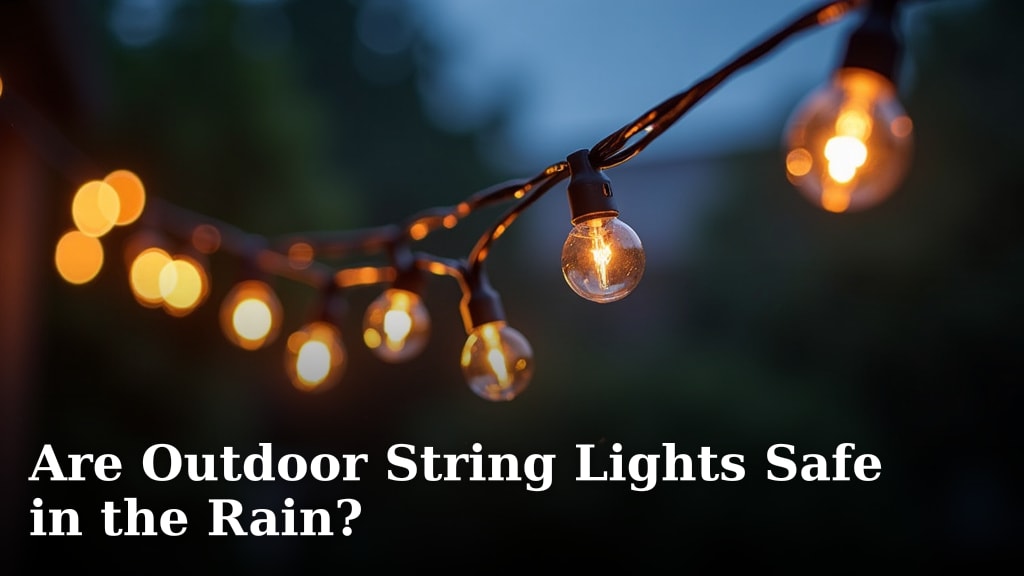
Check Are Outdoor String Lights Safe in the Rain? before you leave a setup out in a storm. Brightown is IP65 and Addlon is IP65, which helps with rain, wind, and snow, but neither rating makes a plug safe to sit in water.
Use a cover or a raised spot for each connector. Point plugs down where you can, so water runs off.
Keep the strand away from fire pits, heaters, and grill heat.
If you secure seating near the lights, see How To Secure Patio Furniture To Deck? and How To Anchor Patio Furniture To Deck?. Stable chairs keep people from pulling on a strand.
How do you pick between the three options here?
Pick Brightown for a short rail run, Addlon for a long overhead run, and FLSNT bulbs for replacements. That rule covers most deck layouts.
Choose Brightown if your deck needs one 29 ft run with 12 bulbs and close spacing. Choose Addlon if your deck needs a 48 ft run with 15 bulbs and wide spacing.
Choose FLSNT only if your strand uses E26 S14 bulbs and you need spares.
Also check best outdoor string lights for deck if your deck is large or has unusual posts. That guide covers more strand lengths and bulb counts.
To string outdoor lights on deck well, measure first, mount second, and connect last. That order gives you an even line, safe plugs, and room to fix a span before you commit.
Frequently asked questions
How much sag should a deck light strand have?
Aim for a gentle sag of about 6 to 12 inches between supports on most deck spans. That curve looks neat, reduces strain on sockets, and leaves room for wind movement.
Measure the straight distance first, then add the sag allowance before you buy or cut a run short.
Can I hang string lights from deck rail posts?
Yes, you can use rail posts as supports if the hooks or clips suit the post size and you avoid drilling where you do not want holes. Screw-in cup hooks, clamp clips, and cable ties work for many rails.
Keep the strand clear of sharp edges and test the hold before you add weight.
How many strands can I connect together?
Only connect the number of strands the maker states for that strand. Brightown states up to 60 strands end to end, while addlon states up to 28 strands.
Those limits differ by cord and voltage design.
Exceeding the stated limit can overload the run, so plan separate outlets instead.
Do string lights need a dimmer?
No, a dimmer is optional and not included with the strands in this guide. Brightown is fully dimmable with a separate dimmer, and addlon is dimmer compatible with a switch not included.
If you want mood control, choose a dimmer rated for the bulb type and check fit before you buy.