Can You Use a Smokeless Fire Pit on a Deck?
You can use a smokeless fire pit on some decks only when the manufacturer allows it and you use the required stand, pad, and clearances. Wood and composite decks can still be damaged by heat, sparks, and embers.
On this page (7 sections)
- Can you use a smokeless fire pit on a deck?
- Why does deck material change the answer?
- How much clearance does a smokeless fire pit need?
- Which products can help with deck heating?
- Are fire pit tables safer on wood decks?
- What should you check before lighting a deck fire pit?
- Can you use a smokeless fire pit on a deck?
You can use a smokeless fire pit on a deck only when the fire pit maker allows deck use and you follow the required stand, heat shield, and clearance rules. “Smokeless” describes reduced visible smoke, not a fire that is harmless to wood, composite boards, railings, or outdoor furniture.
Check the fire pit manual, your deck material guidance, local fire rules, and any building or insurance restrictions before lighting it. For broader patio heating choices, see our guide to patio heaters.
Can you use a smokeless fire pit on a deck?
You may use one on a deck when the complete setup is approved for that surface. The fire pit, stand, pad, fuel, overhead clearance, and side clearances all matter.
A smokeless wood-burning pit still creates high heat beneath the bowl and around the flames. It can also release sparks and embers if the fire is disturbed, wood shifts, or wind moves ash beyond the rim.
A gas smokeless pit avoids burning logs, but its flame and heated components can still damage decking. Follow the exact clearance numbers for the model rather than copying the spacing from another fire pit.
Before lighting anything, inspect the deck for dry leaves, outdoor cushions, rugs, storage boxes, and low branches. Keep a suitable fire extinguisher or water source available according to the fuel type and local rules.
Why does deck material change the answer?
Wood, composite, vinyl, and painted decks respond differently to heat. A surface that looks solid may still scorch, soften, discolor, or trap heat beneath a fire pit.
Wood decking can char from radiant heat or hot ash. Composite decking can deform or lose its finish when exposed to temperatures beyond its design range.
Vinyl and plastic components may soften or melt.
A deck's surface is only part of the risk. Heat can travel through gaps and affect joists, fascia, siding, or objects stored underneath.
Check the area below the deck before deciding where a fire feature could go.
Use a noncombustible pad only when it is approved for the fire pit and deck setup. A thin decorative mat is not automatically a heat shield, and it may hold heat against the boards.
For suitable options, compare fire pit mats for wood decks.
What does a stand actually do?
A stand raises the fire pit and can improve airflow beneath it, but it does not make every deck suitable. The stand must match the fire pit's design and support its weight securely.
Keep the pit level and stable. Do not place blocks, improvised bricks, or loose materials under the legs to gain height unless the manufacturer specifically allows that arrangement.
If the model requires a heat shield beneath the bowl, use the specified shield with the specified stand. A stand that works for one fire pit may not provide the same protection for another.
How much clearance does a smokeless fire pit need?
Use the clearances in the fire pit manual for combustible surfaces, walls, railings, umbrellas, roofs, and branches. Do not rely on a general rule because fire pits differ in height, fuel, flame pattern, and heat output.
Measure from the hottest part of the fire pit, not just from the outer rim. Include nearby chairs, cushions, curtains, siding, and decorations in the clearance check.
Wind changes the practical risk. Sparks can travel toward a railing or wall, and smoke can enter an open window even when the fire pit itself is far enough away.
Overhead clearance matters too. A roof, pergola, awning, or tree canopy can trap heat and smoke.
If the manual does not clearly allow the planned location, move the fire pit to an open, noncombustible area.
Our guide on how to use a fire pit covers placement, fuel handling, supervision, and extinguishing steps.
Which products can help with deck heating?
A smokeless fire pit may not be the best answer for every deck. If the manual allows deck use, compare fire pits for decks.
These options solve the need for outdoor warmth without requiring you to place a wood-burning bowl directly on the boards.
Propane heat without a fire bowl
The Amazon Basics heater is a standalone propane tower with 46,000 BTUs, adjustable heat output, wheels, a water tank for weighing down the base, a tilt safety auto-shutoff valve, and a 9-foot heating radius. It measures 32.1 x 32.1 x 91.3 in and requires a 20 lb liquid propane tank.
This option suits a deck where local rules and the heater manual allow propane equipment. Its 91.3 in height makes overhead clearance especially important.
Keep the tank and heater away from combustible materials, and use the included chain as directed to secure the tank.
It is not a smokeless fire pit, and it does not create a flame-centered gathering spot. Choose it when the main goal is warmth around seating rather than burning wood.
A wood-burning pit for a fire-safe surface
The Sunnydaze Crossweave 36" Large Outdoor Fire Pit is a round, wood-burning steel fire pit with a 36 in outer ring, a 31 in fire bowl, an 11 in bowl depth, and a 24 in height with the spark screen attached. It includes a log grate, spark screen, poker, and cover.
This model is better suited to a noncombustible area than directly on deck boards. Its 360-degree crossweave cutouts and built-in log grate support airflow, while the spark screen helps contain flying embers.
The bowl has no drainage holes, so rainwater must be emptied after use. Cover it between uses and store it in a dry, covered location.
For deck-specific wood-burning decisions, read how to choose a wood burning fire pit for a deck.
Electric heat mounted away from the floor
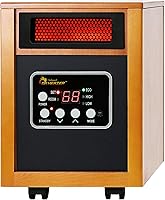
The DR. INFRARED HEATER Portable Infrared Indoor and Outdoor Space Heater uses corded electric power at 120V and has 3 settings: 900W, 1200W, and 1500W.
It includes a remote control and wall and ceiling mounting brackets, measures 35 x 8 x 4 in, and weighs 8 lb.
This option suits a deck with a suitable mounting location and a properly protected power connection. Its wall or ceiling placement can keep the heat source away from deck boards, but the installation still needs the clearances and mounting method specified for the heater.
It creates radiant infrared heat rather than a fire. Choose it when you want warmth without wood, ash, or propane fuel.
Are fire pit tables safer on wood decks?
A fire pit table is not automatically safe on a wood deck. Its tabletop can keep seating organized, but the burner, bowl, base, and heat below the unit still need the correct clearances and protection.
Read Are Fire Pit Tables Safe on Wood Decks? before choosing one. If you are comparing a specific style, Can You Use a Fire Pit Table on a Wood Deck? explains the questions to ask about heat shields, stands, and surface protection.
A surround table may also change how close people place chairs or cushions to the flame. Review best fire pit surround table options with the same clearance rules in mind.
What should you check before lighting a deck fire pit?
Confirm the surface, stand, clearances, fuel, weather, and extinguishing plan before every use. The setup can become unsafe if furniture moves closer or wind increases.
Use this check:
- Confirm that the manual allows the fire pit on the deck.
- Install the approved stand, base, and heat shield.
- Measure side and overhead clearances.
- Remove dry leaves, cushions, rugs, and loose decorations.
- Check wind and postpone use when sparks could travel.
- Keep children and pets away from the hot parts.
- Burn only the fuel allowed for that model.
- Extinguish the fire completely and check for heat or embers underneath.
Never leave a deck fire unattended. Do not move a hot fire pit, pour water into a gas burner, or store fuel where heat can reach it.
For a compact electric flame alternative, compare best smokeless tabletop fire pits, then verify each model's surface and clearance rules before placing it outdoors.
Can you use a smokeless fire pit on a deck?
The answer is yes only when the exact model, deck material, stand, pad, and clearances all meet the maker's instructions and local rules. If any part of that setup is uncertain, move the fire pit to stone, brick, gravel, or another approved fire-safe surface.
Choose the Amazon Basics heater for adjustable propane warmth, the DR. INFRARED HEATER for mounted electric heat, or the Sunnydaze fire pit for a wood fire on a suitable noncombustible area.
A deck is not the right place for every fire feature, even when the design is marketed as smokeless.
Frequently asked questions
Can you use a smokeless fire pit on a wood deck?
You may be able to use one on a wood deck only if the manufacturer approves deck use and specifies the needed stand, heat shield, and clearances. A smokeless design reduces visible smoke, but it does not remove heat, sparks, embers, or the risk of scorching the boards.
Does a smokeless fire pit need a stand on a deck?
Usually, yes. A stand creates space between the fire pit and the deck, but the exact stand and clearance depend on the model.
Use only the stand or base recommended for that fire pit, and place it on a suitable fire-resistant pad when required.
Are composite decks safe under a smokeless fire pit?
Composite decking can soften, discolor, or deform when exposed to high heat, even without open flames touching the boards. Check the decking maker's guidance and the fire pit manual before use.
If either source limits fire features, choose a different heating method.
What is safer than a smokeless fire pit on a deck?
An electric infrared heater can avoid burning wood or propane on the deck, but it still needs proper mounting, electrical protection, and clearance from combustible materials. A propane patio heater may also work where permitted, provided you follow its manual and local fire rules.