Can You Use a Fire Pit Table in Winter?
On this page (8 sections)
- Enjoying Your Fire Pit Table Through Winter’s Chill
- Materials Matter for Cold-Weather Fire Pit Tables
- Preparing Your Fire Pit Table for Winter Use
- Fueling Your Fire Pit Table in Winter
- Safety Precautions for Winter Fire Pit Use
- Winter Fire Pit Table Maintenance Checklist
- Conclusion
- Frequently Asked Questions
Yes, you can absolutely use a fire pit table in winter! With the right precautions, you can enjoy the warmth and ambiance of your fire pit even when the temperatures drop. Many modern fire pit tables are designed for year-round use, making them a fantastic addition to your outdoor space through the colder months.
It’s important to understand that winter use involves some extra considerations. You’ll want to ensure your fire pit table is made from durable materials that can withstand frost and snow. Proper maintenance is also key to keeping it safe and functional. We found that many users enjoy extending their patio season well into the fall and winter.
- Yes, fire pit tables can be used in winter.
- Proper preparation is essential for safe winter use.
- Ensure your table is made of weather-resistant materials.
- Regular maintenance keeps it functional and safe.
Let’s walk through exactly how you can safely enjoy your fire pit table all winter long.
Enjoying Your Fire Pit Table Through Winter’s Chill
The short answer is a resounding yes! You can absolutely use your fire pit table in winter. Imagine cozying up outdoors with a warm drink while enjoying the gentle glow of flames, even when frost is on the ground. Many fire pit tables are built to withstand colder weather, allowing you to extend your patio season much longer than you might have thought possible.
However, winter use requires a bit more attention than summer enjoyment. You’ll want to be mindful of material durability and take extra steps to protect your fire pit table. Let’s dive into how you can make winter fire pit sessions safe and enjoyable.
Materials Matter for Cold-Weather Fire Pit Tables
When you’re thinking about using your fire pit table in winter, the first thing to consider is what it’s made of. Not all fire pit tables are created equal when it comes to braving the cold and moisture of winter. The best ones are constructed from materials that can handle frost, snow, and temperature fluctuations.
Durable Choices for Frosty Weather
Stainless steel is a top performer. It’s highly resistant to rust and corrosion, which are common concerns in damp winter conditions. You’ll find many high-quality fire pit tables feature stainless steel components. Another excellent option is powder-coated steel. This finish adds an extra layer of protection against the elements, making it more durable.
Aluminum is also a great choice. It’s naturally rust-proof and lighter than steel, making it easier to move if needed. However, ensure it has a good quality finish to prevent scratches.
Materials to Approach with Caution
Some materials, like certain types of wrought iron, can rust more easily if not properly sealed and maintained. While beautiful, it might require more diligent care during winter months. Similarly, some wooden fire pit tables might not be ideal for constant exposure to snow and ice. If you have a wooden table, ensure it has a robust sealant and consider covering it when not in use.
We found that many manufacturers specify the best use cases for their products. Always check your fire pit table’s manual or the manufacturer’s website for guidance on winter use and material suitability.
Preparing Your Fire Pit Table for Winter Use
Getting your fire pit table ready for winter isn’t just about convenience; it’s about safety and longevity. A little preparation can prevent damage and ensure it’s ready for those chilly evenings. If you’re not using your fire pit table year-round, learn how to properly store patio furniture for winter.
Cleaning is Key Before the Cold Sets In
Before the first frost or snowfall, give your fire pit table a thorough cleaning. Remove any ash, debris, or grease. You can use a soft brush and a mild soap solution for most surfaces. For stubborn grime, you might need a specialized cleaner appropriate for your table’s material. We found that a clean surface helps prevent lingering moisture from causing rust or other damage.
Make sure all parts are completely dry before proceeding to the next step. Residual moisture can freeze, expand, and potentially damage your table. It’s like preparing a good meal; you want all your ingredients ready and dry before you start cooking!
Protecting Against the Elements
A good quality fire pit table cover is your best friend during winter. Look for covers made from waterproof and UV-resistant materials. This cover acts as a shield against rain, snow, ice, and even harsh sunlight, which can still affect materials in winter.
Ensure the cover fits snugly. If it’s too loose, wind can lift it off, or snow can accumulate underneath. Many covers have drawstrings or clips to secure them tightly. We found that a well-fitting cover is essential for keeping your investment safe from the harshest winter conditions.
Consider Additional Storage for Components
If your fire pit table uses a propane tank, you’ll want to store it properly. When the tank is empty or nearly empty, disconnect it. Store propane tanks upright in a well-ventilated area, away from direct heat sources or ignition points. Many experts advise against leaving propane tanks exposed to extreme cold for extended periods.
We recommend bringing smaller components, like spark igniters or decorative elements that might be particularly susceptible to damage, indoors during the off-season or when not in use. This extra step can prevent small issues from becoming bigger problems.
Fueling Your Fire Pit Table in Winter
The type of fuel your fire pit table uses will influence how you operate it during colder months. Most commonly, you’ll encounter propane or natural gas models.
Propane Fire Pit Tables in Winter
Propane can be used in winter, but its performance can be affected by very low temperatures. Propane is stored as a liquid and turns into a gas as it’s released. Extremely cold temperatures can reduce the vapor pressure of propane, making it harder for the gas to flow. This means your fire might burn less intensely or even go out.
What can you do? Keep your propane tank as warm as possible. Placing it in a sheltered spot, perhaps near the heat radiating from the table (but not too close!), can help. Some people even use insulated tank covers. We found that propane typically performs adequately down to about -10°F (-23°C), but performance can vary.
Natural Gas Fire Pit Tables in Winter
Natural gas fire pit tables are generally more reliable in winter. Natural gas is delivered through a pipeline and isn’t stored in a tank, so it’s less affected by ambient temperature. The flow rate is usually more consistent, even in freezing conditions.
The main consideration with natural gas is ensuring your gas line is properly installed and protected. Make sure there are no kinks or obstructions, especially from snow or ice buildup. If you have any doubts about your natural gas line, it’s always best to consult a professional. Safety first, always!
Wood-Burning Fire Pit Tables and Snow
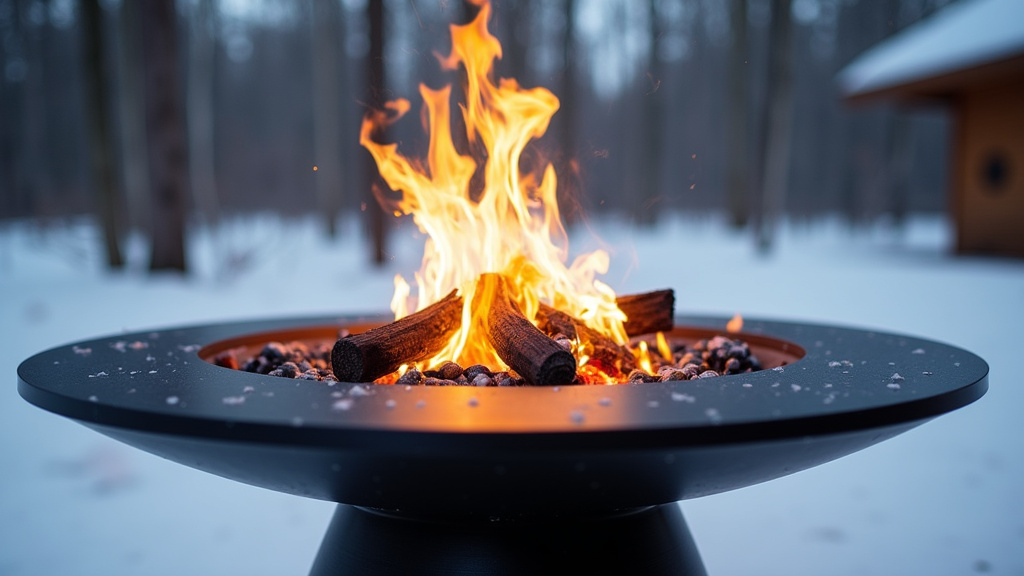
If you have a wood-burning fire pit table, you’ll need to keep the fuel source dry. Wet firewood won’t burn well, and it can create a lot of smoke. Store your firewood under a covered area, like a wood shed or a tarp, to keep it protected from snow and ice.
Safety Precautions for Winter Fire Pit Use
Safety is always the top priority, and it becomes even more critical when using a fire pit in colder, potentially icier conditions.
Clear Snow and Ice Regularly
Before and after each use, make sure the area around and on top of your fire pit table is clear of snow and ice. You don’t want your table buried or surrounded by slippery patches. Shoveling carefully around the unit is essential.
Also, ensure the vents on your fire pit table are not blocked by snow or ice. Proper ventilation is crucial for safe operation, whether you’re using gas or wood. We found that blocked vents can lead to incomplete combustion, which can produce dangerous carbon monoxide gas.
Maintain a Safe Distance
Keep flammable materials well away from your fire pit table. This includes dry leaves, branches, patio furniture cushions, and anything else that could catch fire. Even in winter, dry conditions can occur, and wind can carry embers.
We recommend having a fire extinguisher or a bucket of sand or water nearby, just in case of emergencies. It’s a small precaution that offers great peace of mind. Many safety organizations, like the National Fire Protection Association (NFPA), stress the importance of having extinguishing materials readily available.
Supervise Children and Pets
Just like in warmer months, always supervise children and pets around a lit fire pit. Cold weather might tempt everyone to huddle closer, but the heat from the fire is still intense. Ensure they understand the dangers and maintain a safe distance.
Winter Fire Pit Table Maintenance Checklist
To keep your fire pit table in tip-top shape for winter use and beyond, follow this simple maintenance checklist:
- Clean thoroughly before winter storage or use.
- Inspect for any damage or rust spots.
- Apply protective sealant if recommended for your materials.
- Use a high-quality waterproof cover consistently.
- Store propane tanks properly when not connected.
- Clear snow and ice from around and on the table before each use.
By taking these steps, you can ensure your fire pit table remains a source of warmth and enjoyment throughout the entire year, no matter how cold it gets outside.
Conclusion
You can absolutely keep your fire pit table warm and inviting all winter long! By selecting the right materials, performing thorough preparation, and prioritizing safety, you extend your patio season. Remember to choose durable materials like stainless steel or aluminum, and always use a high-quality cover. Pay attention to how cold affects your fuel source, whether propane or natural gas. With these steps, your fire pit table becomes a cozy centerpiece for winter gatherings.
Your next step? Check your table’s specific material and condition, and make sure you have a great all-weather cover ready before the first snowflake falls!
Frequently Asked Questions
Will a propane fire pit table work in freezing temperatures?
Propane fire pit tables can work in freezing temperatures, but their performance might decrease. Very cold weather can reduce propane’s vapor pressure, leading to a weaker flame. You can help by keeping the propane tank warmer or using an insulated cover.
What’s the best way to protect my fire pit table from snow and ice?
The best protection is a high-quality, waterproof, and UV-resistant fire pit table cover. Ensure it fits snugly to prevent wind and snow from getting underneath. Keeping the table covered when not in use is key to preventing winter damage.
Can I leave my fire pit table outside all winter?
Leaving your fire pit table outside all winter is possible if it’s made of durable, weather-resistant materials and you use a protective cover. However, bringing it into a garage or shed during extreme weather or long periods of inactivity can further prolong its lifespan.
How often should I clean my fire pit table during winter?
You should clean your fire pit table thoroughly before winter begins. During the winter, focus on clearing snow and ice from around and on top of the table before each use. Regular cleaning isn’t usually needed unless you’re using it frequently in milder winter conditions.
Are there specific safety concerns when using a fire pit table in the winter?
Yes, you must always clear snow and ice to ensure proper ventilation and prevent blockages. Also, maintain a safe distance from flammable materials, as dry winter air can still pose a fire risk. Always keep extinguishing materials nearby and supervise children and pets.