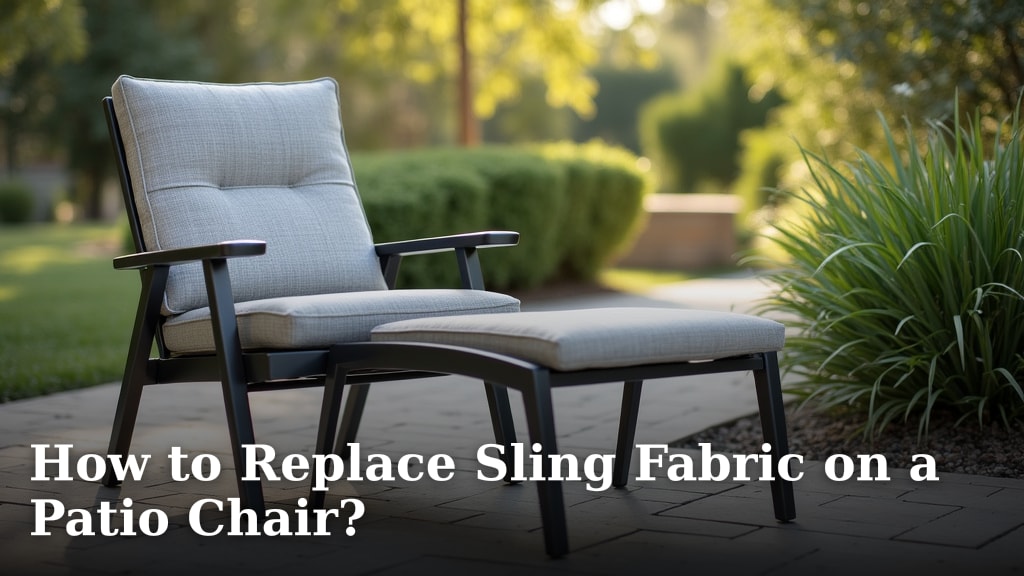
How To Replace Mesh Fabric On Patio Chairs?
On this page (6 sections)
To replace mesh fabric on patio chairs, you first remove the old fabric by carefully extracting the spline that holds it in place within the frame’s groove.
Then, you measure and cut your new mesh fabric, making sure to leave a little extra for tension, before pushing the fresh fabric into the chair’s groove and securing it with new spline using a spline tool.
- You’ll start by taking apart your chair and removing the old fabric.
- Measure precisely to cut your new mesh material.
- Install the new fabric by pushing it into the frame’s groove.
- Secure the fabric with fresh spline for a tight fit.
- Finally, put your chair back together to enjoy its renewed look.
How To Replace Mesh Fabric On Patio Chairs?
Replacing mesh fabric on your patio chairs is a practical mesh chair repair project. You simply remove the old spline, cut new fabric, install the new spline, and reassemble the chair for a fresh look.
Why Replace Your Patio Chair Mesh?
Is your patio furniture looking a little tired? Faded, torn, or sagging mesh can really detract from your outdoor space. Replacing the fabric gives your chairs a second life, making them look brand new.
Saving Money and Time
Think about it: buying a new set of patio chairs can be quite expensive. Replacing just the mesh fabric is a far more budget-friendly option. We found that many homeowners save a lot by choosing this repair over replacement.
It’s also quicker than shopping for new furniture. You can often complete this project in an afternoon. This means more time relaxing and less time navigating furniture stores.
Boosting Patio Aesthetics
A fresh, taut mesh can transform your outdoor area instantly. It brightens up your patio and makes it feel more inviting. You can even choose a new color or pattern to update your decor style.
This simple fix makes your chairs comfortable again. No more uncomfortable sagging spots or rough edges. It’s like giving your patio a mini-makeover without the major cost.
Gathering Your Tools and Materials
Before you begin, it’s a good idea to have everything ready. This prevents interruptions and makes the process smoother. Think of it like packing for a picnic—you want all your goodies lined up.
What You’ll Need For This DIY Fix
Having the right supplies on hand is half the battle. We found that preparing thoroughly makes the job much easier. Here’s a list to get you started:
- New mesh fabric (often called sling fabric)
- New spline (the rubber cord that holds the fabric)
- Spline roller tool
- Scissors or a utility knife
- Measuring tape
- Screwdriver or wrench (for chair disassembly)
- Flathead screwdriver or awl (for removing old spline)
- Cleaning supplies (soap, water, brush)
Step-by-Step Guide to Mesh Replacement
Now that you have your tools, it’s time to get down to business. Don’t worry, it’s not as tricky as it sounds. We’ll walk you through each step.
Preparing Your Chair
First things first, you need to get your chair ready for surgery. This means taking it apart and cleaning it. Think of it as preparing a canvas before painting.
Removing the Old Fabric
Start by disassembling the chair frame. Many experts say to take photos as you go to remember how to put it back together. Use your screwdriver or wrench for bolts and screws.
Once the frame sections are separated, you’ll see the old mesh fabric. Look for the spline, which is often a rubber cord, tucked into a groove. Use your flathead screwdriver or awl to carefully pry it out. Once you get an edge, you can usually pull it all out easily. Then, remove the old fabric.
Cutting the New Mesh Fabric
Accuracy here is your best friend. A well-cut piece makes installation much smoother. It’s like tailoring a suit—a precise cut makes all the difference.
Getting the Right Dimensions
Lay your old mesh fabric flat on your new material. Use it as a template. Research often suggests adding an extra inch or two around all sides. This gives you enough material to create tension and trim later.
Carefully cut your new fabric using sharp scissors or a utility knife. Make sure your lines are straight. This extra material will be helpful for getting a tight, wrinkle-free finish.
Installing the Fresh Fabric
This is where your spline tool comes in handy. It’s designed to make pushing the spline into the groove simple. A little patience goes a long way here.
Working With Spline and Grooves
Center your new fabric over one of the frame sections. Start at one end of a groove. Press the fabric edge into the groove, then immediately follow with the new spline using your spline roller tool. Roll it firmly into the groove, securing the fabric.
Work your way around the frame, pulling the fabric taut as you go. Many guides recommend starting with one long side, then the opposite, then the short sides. This helps distribute tension evenly. If you see wrinkles, you can usually pull the spline out a bit and readjust the fabric.
| Step | Action | Tip for Success |
|---|---|---|
| 1 | Position Fabric | Center fabric over frame section. |
| 2 | Insert Spline (Corner) | Start at a corner, push fabric into groove. |
| 3 | Roll Spline (Length) | Use spline tool to push spline firmly along the groove. |
| 4 | Pull Fabric Taut | Keep fabric stretched and smooth as you work. |
| 5 | Trim Excess | Once all spline is in, trim any overhang. |
Reassembling Your Patio Chair
With the new fabric installed, it’s time to put your chair back together. This is where those photos you took earlier can be a real lifesaver. It’s like putting a puzzle back together, piece by piece.
Carefully reattach all the frame sections. Tighten screws and bolts securely. Double-check everything to ensure stability. Give it a gentle wobble test to make sure it’s sturdy and safe.
Troubleshooting Common Issues
Sometimes, things don’t go perfectly on the first try, and that’s okay. Even the pros encounter little hiccups. Here are some common problems and how to solve them.
When Things Don’t Go as Planned
Don’t be discouraged if you hit a snag. Most issues are easily fixable with a bit of adjustment. Think of it as fine-tuning your masterpiece.
- Fabric isn’t taut enough? You might need to remove a section of spline and pull the fabric tighter before re-inserting.
- Wrinkles appear? Gently pull the fabric from the edges and smooth it out before pushing the spline in fully.
- Spline keeps popping out? Make sure you’re using the correct spline size for your chair’s groove. Sometimes, a slightly thicker spline is needed.
- Difficulty pushing spline? The spline roller tool is essential here. If you’re struggling, check your technique or the tool itself.
- Chair feels wobbly after reassembly? Double-check that all screws and bolts are tightened completely.
Maintaining Your Newly Refurbished Chairs
You’ve done the hard work, now let’s keep those chairs looking great. A little care goes a long way in preserving your efforts. It’s like watering a garden—consistent attention yields lasting beauty.
Regularly clean your mesh fabric with mild soap and water. Avoid harsh chemicals that can damage the material. We found that a soft brush helps remove dirt from the weave. When not in use, consider covering your chairs or storing them indoors during harsh weather. This protects them from sun and rain, extending the life of your new fabric.
Conclusion
Replacing the mesh fabric on your patio chairs is a rewarding and cost-effective project. You not only save money but also contribute to sustainability by extending the life of your furniture. With a few simple tools and a bit of patience, you can revitalize your outdoor space and enjoy comfortable, stylish seating once again. It’s a great feeling to relax on chairs you’ve personally restored!
What kind of mesh fabric is best for patio chairs?
The best mesh fabric for patio chairs is typically made from PVC-coated polyester or vinyl. These materials are known for their durability, resistance to UV rays, mildew, and fading, making them perfect for outdoor conditions. They also offer good breathability and quick drying.
Can I reuse the old spline when replacing the fabric?
While you might be tempted to reuse old spline, it’s generally not recommended. Old spline can become brittle, stretched, or lose its elasticity over time, which can lead to the new fabric coming loose. It’s a small investment to get new spline and ensure a secure, long-lasting repair.
How long does it typically take to replace the fabric on one patio chair?
For someone new to the task, replacing the fabric on one patio chair might take anywhere from 1 to 3 hours. With practice, you can often complete the job much faster, sometimes in under an hour. The time varies based on the chair’s design and your experience level.
What if my chair frame is rusted or damaged?
If your chair frame shows signs of significant rust or damage, it’s a good idea to address those issues before installing new fabric. Minor rust can often be removed and then sealed with a rust-inhibiting primer and paint. For major structural damage, you might need to assess if the chair is safe and worth repairing before proceeding with the fabric replacement.
Is it worth replacing the mesh fabric on just one chair if the others are fine?
Absolutely! If only one chair’s mesh is damaged, replacing just that one is a very practical choice. It saves you money and effort compared to refurbishing the entire set or buying a new chair. This approach helps maintain a consistent look for your patio while fixing only what’s necessary.