How to Fix a Scratched Patio Dining Set?
On this page (3 sections)
The easiest way to fix a scratched patio dining set is to use a repair kit or touch-up paint matched to your furniture’s material and color. For deeper scratches, you might need to gently sand the area first. We found that early repair prevents worse damage and keeps your set looking great.
Don’t let a few nicks ruin your outdoor oasis; restoring your patio set is often simpler than you think. You can often make your furniture look new again with just a few supplies. We looked into the best ways to tackle these common blemishes, from minor scuffs to deeper gouges.
- Identify the material of your patio set.
- Clean the scratched area thoroughly.
- Choose the right repair method (kit, paint, or filler).
- Apply the repair solution carefully.
- Protect your furniture from future scratches.
Let’s walk through exactly how to assess the damage and pick the perfect fix for your patio dining set, step by step.
Restoring Your Scratched Outdoor Dining Set
Is your patio dining set showing signs of wear? Don’t worry, those scratches don’t mean the end. We found that most common types of outdoor furniture can be fixed quite easily. You just need to know what you’re working with.
Identify Your Patio Furniture Material
Before you can fix anything, you need to know your material. Different materials require different repair approaches. Guessing can lead to bigger problems, so take a moment to be sure.
Wood Patio Furniture
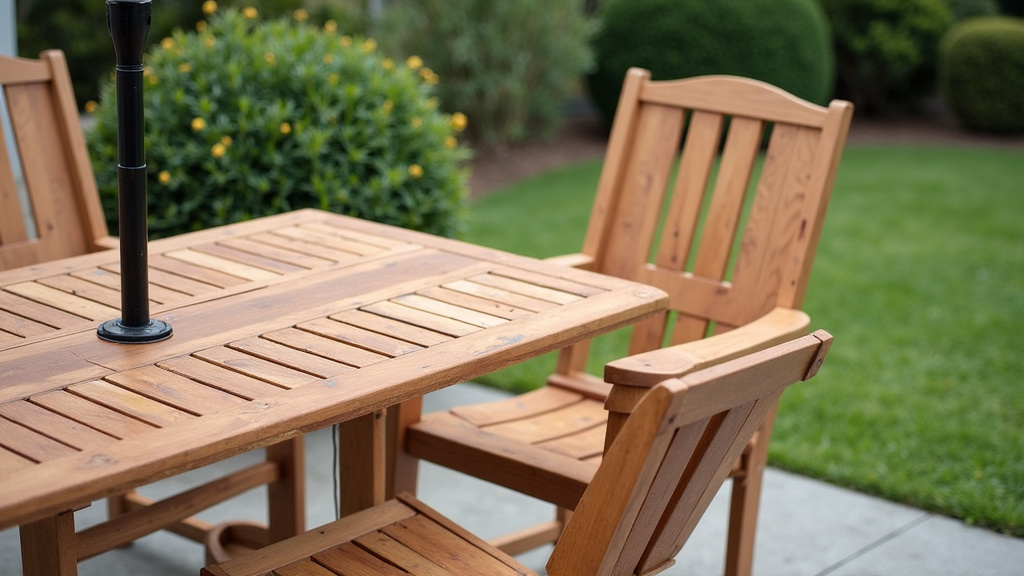
Wooden sets often get scratches from normal use. Think chairs scraping, or items sliding across the tabletop. Teak, cedar, and acacia are popular choices. Scratches on wood usually mean damage to the finish or the wood itself.
Metal Patio Furniture
This includes wrought iron, aluminum, and steel. Metal furniture is durable, but scratches can happen. These often appear as chips in the paint or powder coating. Exposure to moisture after a scratch can lead to rust.
Wicker and Rattan Patio Furniture
Wicker and rattan furniture can be natural or synthetic. Synthetic options are often made from HDPE or PVC. Scratches might appear as frayed strands or chipped paint on the surface. Natural wicker can also dry out and become brittle.
Plastic or Resin Patio Furniture
These sets are generally low-maintenance. Scratches on plastic are usually surface-level. They might look like scuffs or white marks. Deeper gouges are less common but can occur.
Glass Tabletops
Many patio sets have glass tabletops. Glass can scratch, but it’s often a different kind of repair. These scratches are typically fine lines or deeper etchings. Repairing glass can be more specialized.
Preparing for the Repair
Preparation is key for any successful repair. A clean surface ensures your fix will adhere properly and look seamless. Skipping this step can make your hard work pointless.
Clean the Scratched Area Thoroughly
Start by washing the entire piece of furniture. Use mild soap and water. A soft cloth or sponge works best. Make sure to rinse off all soap residue. Let it dry completely before moving on.
Gather Your Supplies
What you need depends on your material and scratch depth. We found it’s always better to have everything ready. This prevents interruptions once you start the repair process.
- Clean cloths
- Mild soap and water
- Sandpaper (various grits, e.g., 220, 320, 400)
- Masking tape
- Repair kit (specific to material)
- Touch-up paint or stain
- Protective sealant or clear coat
- Gloves and safety glasses
Fixing Scratches on Your Patio Set
Now, let’s get into the actual repair work. Remember, patience is important here. Don’t rush the process; good results take time. We’ve broken it down by material for clarity.
| Material | Minor Scratches | Deeper Scratches/Gouges |
|---|---|---|
| Wood | Wood repair markers, furniture polish. | Fine sanding, wood filler, stain/paint matching. |
| Metal | Touch-up paint (rust-inhibiting). | Wire brush (for rust), primer, auto body filler, paint. |
| Wicker/Rattan | Minor weaving, touch-up paint. | Replace strands, epoxy filler, repaint. |
| Plastic/Resin | Plastic polish, heat gun (carefully!). | Plastic repair kit, sanding, paint if needed. |
| Glass | Glass scratch repair kit, cerium oxide paste. | Professional repair or replacement. |
Wood Furniture Repair
For light scratches, you might try a wood repair marker or crayon. Choose a color that closely matches your wood finish. Simply apply it directly to the scratch. Wipe away any excess.
Deeper scratches need more work. We recommend gently sanding the area. Start with fine-grit sandpaper (around 220-grit). Sand in the direction of the wood grain. Then use a finer grit (320-400) for smoothness. Apply a small amount of wood filler if it’s a deep gouge. Once dry, sand again until flush. Finally, stain or paint to match the original finish. Finish with a clear outdoor sealant.
Metal Furniture Repair
If you see rust, tackle that first. Use a wire brush or sandpaper to remove all rust. Then clean the area. Apply a rust-inhibiting primer. Let it dry completely.
For chips or scratches, use outdoor-grade touch-up paint. Many furniture brands sell matching colors. Apply thin coats, allowing each to dry. For deeper gouges, you might need a bit of auto body filler. Apply a small amount, smooth it, sand it, then prime and paint. Finish with a clear coat for added protection.
Wicker and Rattan Repair
Synthetic wicker is often easy to fix. For minor fraying, you can sometimes gently trim the loose ends. If the color has chipped, use a flexible outdoor paint. Make sure it adheres well to plastic.
For natural wicker, sometimes a bit of wood glue can reattach loose strands. If strands are broken, you might need to weave in new ones. This can be tricky. For deeper damage, an epoxy filler can sometimes mend breaks. Once dry, sand and paint to match. We found that keeping natural wicker conditioned can prevent future breakage (National Institute of Environmental Health Sciences).
Plastic or Resin Furniture Repair
Light scratches on plastic can sometimes be buffed out. A plastic polish or a very mild abrasive cleaner might work. Always test in an inconspicuous area first. Some people use a heat gun on a very low setting, but this requires extreme caution. Too much heat can melt or warp the plastic.
For deeper scratches, a plastic repair kit is your best bet. These often include filler and tools. Apply the filler according to directions. Sand smooth once dry. If the color is affected, you might need an outdoor-grade plastic paint.
Glass Tabletop Repair
Glass scratches are different. You can find glass scratch repair kits. These often contain a polishing compound like cerium oxide. You apply it with a felt pad and a rotary tool. It’s a slow process and might not remove very deep scratches.
We found that for significant glass damage, professional repair or replacement is usually recommended. Attempting to fix deep glass scratches yourself can make them worse. Safety is paramount with glass, so consider professional help if you’re unsure.
After the Repair: Protecting Your Furniture
You’ve done the hard work, now protect your investment. A little maintenance goes a long way. Think about how to prevent future scratches and keep your furniture looking new.
Here’s a quick checklist:
- Apply a protective sealant or clear coat to repaired areas.
- Use furniture covers when your set is not in use.
- Place felt pads or rubber caps under chair legs.
- Use placemats or tablecloths on dining surfaces.
- Clean spills promptly to prevent etching or staining.
- Store furniture indoors during harsh weather.
When to Consider Professional Help
Sometimes, DIY just isn’t enough. There’s no shame in calling in an expert. If you have extensive damage or valuable antique furniture, professional restoration might be best. They have specialized tools and expertise. This ensures a high-quality, lasting repair. Don’t risk further damage if you feel out of your depth. A quick call for a quote might surprise you.
Conclusion
You now have the knowledge and steps to tackle those annoying scratches on your patio dining set. We covered identifying materials, thorough preparation, and specific repair methods for wood, metal, wicker, plastic, and glass. Remember that a little effort can go a long way in preserving your furniture’s appearance and lifespan.
By choosing the right repair technique and taking preventative measures, you can keep your outdoor oasis looking beautiful for years to come. Don’t let scratches diminish your enjoyment. Grab your supplies and get started today; your patio set will thank you!
Frequently Asked Questions
How can I prevent new scratches on my patio dining set?
To prevent new scratches, use furniture covers when the set isn’t in use, especially during bad weather. Place felt pads under chair legs to avoid scraping. Also, always use placemats or tablecloths on dining surfaces.
Is it worth repairing an old, inexpensive plastic patio set?
It often is! For inexpensive plastic sets, minor scuffs can be buffed out with polish or even gently heated. Deeper scratches can be fixed with plastic repair kits. This is usually much cheaper than buying a whole new set.
Can I use car scratch remover on metal patio furniture?
While some car scratch removers might work on minor surface scratches, it’s generally not recommended. Car products aren’t designed for outdoor furniture. We found that using rust-inhibiting outdoor touch-up paint or primer specifically made for metal patio furniture gives better, longer-lasting results.
What should I do if I can’t find touch-up paint that matches my furniture color?
If you can’t find an exact match, try a local hardware store that offers custom paint mixing. Bring a small, inconspicuous part of your furniture or a clear photo for color matching. Alternatively, consider repainting the entire piece for a fresh, uniform look.
When is it better to replace a scratched patio dining set rather than repair it?
You might consider replacement if the damage is extensive across multiple pieces, or if structural integrity is compromised. If professional repair costs more than a new set, or if you’re looking for a style upgrade, replacement makes sense. For most scratches, however, repair is a great first option.