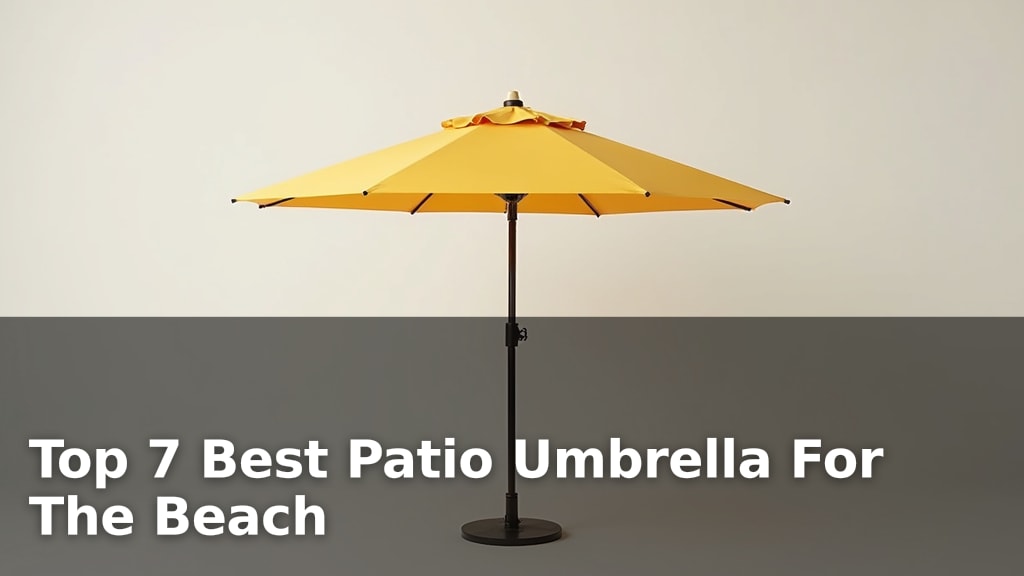
Why Is My Patio Umbrella Keep Tipping Over?
On this page (3 sections)
Your patio umbrella keeps tipping over because of basic physics. The main culprits are usually wind, an unstable base, or an imbalance in the umbrella’s weight distribution. You’re fighting against Mother Nature and sometimes gravity itself when your patio umbrella keeps tipping over. Finding the best patio umbrella for your space can help prevent these common tipping issues.
We’ve all been there, watching our beautiful outdoor decor become a projectile. Often, the wind catches the canopy like a sail. A lightweight or inadequate base simply can’t hold it steady. Or perhaps your umbrella isn’t centered correctly, creating an easy tipping point.
- Wind resistance is key.
- A heavy, stable base is essential.
- Proper umbrella placement prevents tipping.
- Check for damage regularly.
- Consider anchoring solutions.
Let’s dive into the science and simple solutions to keep your patio umbrella firmly in place, even on a breezy day. We’ll show you how to enjoy your outdoor space without chasing your umbrella across the yard.
Understanding Why Your Patio Umbrella Becomes a Launchpad
You’re not alone if your patio umbrella seems to have a mind of its own. It’s often a combination of factors working against you. Most often, your umbrella simply isn’t equipped for the conditions. Our guide to the best patio umbrella options can help you choose one better equipped for various conditions.
The Wind’s Unseen Hand: Your Umbrella as a Sail
The most common culprit is often the wind. Think of your open umbrella canopy like a ship’s sail. It’s designed to catch the breeze. Even a gentle gust can generate a surprising amount of lift and force.
Wind Speed and Force: A Direct Relationship
Even light breezes can create significant force. We found that wind pressure increases dramatically with wind speed. A 20 mph wind exerts four times the pressure of a 10 mph wind. This means your umbrella is experiencing much more stress than you might imagine.
- Lift force: Wind passing over the canopy creates upward pressure.
- Drag force: Wind pushing against the canopy causes horizontal pressure.
- Turbulence: Swirling wind can cause unpredictable forces.
Canopy Size and Material: Bigger Isn’t Always Better
The larger your umbrella’s canopy, the more surface area there is for the wind to grab. A 9-foot umbrella, for example, has significantly more “sail” than a 6-foot one. The type of fabric also plays a role. Tightly woven, solid fabrics catch more wind than those with vents or mesh.
The Foundation Fails: Is Your Base Up to the Task?
A strong base is the cornerstone of a stable patio umbrella. Without it, even a slight breeze can send your umbrella tumbling. Many people underestimate the weight needed to truly secure their umbrella.
Weight Matters: The Heavier, The Better
Your umbrella base needs to be heavy enough to counteract the forces of wind and leverage. What feels heavy to lift might not be heavy enough to hold your umbrella steady. Research suggests that a good rule of thumb is 10 pounds of base weight per foot of umbrella diameter (National Weather Service advisories often highlight wind force issues).
For example, a 9-foot umbrella would ideally need a 90-pound base. This might seem like a lot, but it provides essential stability.
Base Types: Understanding Your Options
There are several types of umbrella bases, each with pros and cons:
| Base Type | Typical Weight Range | Best Use | Considerations |
|---|---|---|---|
| Concrete/Cast Iron | 50-100+ lbs | Freestanding umbrellas | Very durable, can be heavy to move |
| Water/Sand Filled | 50-150+ lbs (when filled) | Freestanding umbrellas | Easier to move when empty, can be bulky |
| Under-Table Base | 20-40 lbs | Umbrellas through a table hole | Relies on table for extra stability, less weight needed |
| Cross-Base (with pavers) | Varies (paver weight) | Cantilever umbrellas | Requires additional paving stones for weight |
If your umbrella is going through a table, you can get away with a lighter base. The table itself adds stability. But for a freestanding umbrella, you absolutely need a heavier base.
Center of Gravity: The Unseen Balancing Act
Even with a heavy base and a sturdy pole, your umbrella can still tip if its weight isn’t balanced correctly. This is all about the center of gravity. If it shifts too far, your umbrella is vulnerable.
Tilting and Offsetting: Shifting the Balance
Many modern umbrellas offer tilting or offsetting features. These are great for shade, but they also change the umbrella’s balance. When you tilt an umbrella, you move its center of gravity. This makes it more susceptible to tipping, especially in windy conditions. Always return your umbrella to its upright position when not in use or during high winds.
Wear and Tear: The Silent Instigator
Over time, even the best patio umbrellas can develop weaknesses. These small issues can add up, turning your once-stable umbrella into a tipping hazard. Regular checks can save you a lot of trouble.
Damaged Ribs or Pole: Structural Weakness
Are any of the umbrella ribs bent or broken? Is the main pole straight, or does it show signs of bowing or cracking? These structural weaknesses compromise the integrity of your umbrella. A damaged pole cannot support the canopy’s weight or withstand wind forces effectively.
Loose Fittings and Connections: The Wiggle Factor
Check all the screws, bolts, and connections between the pole and the base. Over time, these can loosen. A wobbly connection means less stability. Make sure the tightening knob on your base is securely fastened around the umbrella pole. We’ve seen many cases where a simple tightening of a bolt made all the difference.
Placement and Environment: Setting Your Umbrella Up for Success
Where and how you set up your umbrella significantly impacts its stability. Small adjustments can prevent big headaches.
Exposure to Wind: Choose Your Spot Wisely
Avoid placing your umbrella in known wind tunnels or highly exposed areas. Corners of buildings, open decks, or areas near large open fields can amplify wind effects. Try to position your umbrella in a more sheltered spot, perhaps near a wall or a dense hedge, if possible.
Uneven Surfaces: A Recipe for Disaster
An umbrella base needs a flat, stable surface to perform optimally. Placing it on uneven pavers, soft grass, or a sloped patio means the base itself isn’t truly stable. This unevenness creates an immediate tipping point, making your umbrella vulnerable even in calm conditions.
Solutions to Keep Your Umbrella Grounded
Now that you understand the “why,” let’s look at the “how-to.” Keeping your umbrella from tipping over isn’t rocket science, but it does require some thoughtful attention. You want to enjoy your outdoor space, not dread every gust of wind.
Upgrade Your Base: More Weight, More Stability
The simplest and often most effective solution is to get a heavier base. If you have a freestanding umbrella, aim for a base that’s 75-100+ pounds. For umbrellas through a table, 30-50 pounds is usually sufficient, as the table provides additional support. You can also add extra weight to an existing base with sandbags or specialized weights designed for this purpose.
Anchoring and Securing: Going the Extra Mile
Sometimes, a heavy base isn’t enough, especially for very large umbrellas or in exceptionally windy areas. Consider these additional anchoring options:
- Deck anchors: These bolt directly to your deck for maximum security.
- Ground anchors: Similar to deck anchors but designed for soil or grass.
- Sandbags or paver weights: These can be placed on top of or around your existing base for added ballast.
- Umbrella straps: Straps that secure the umbrella pole to a railing or sturdy furniture can help prevent tipping.
Canopy Management: Close It Up!
This might seem obvious, but it’s often overlooked. Always close your umbrella when it’s not in use. This is especially true if you’re leaving for the day or if strong winds are forecast. An open umbrella is just asking for trouble. Even a slight breeze can turn into a powerful gust, and you don’t want to find your umbrella in your neighbor’s yard.
Your Umbrella Stability Checklist
Before you get comfortable under your patio umbrella, run through this quick checklist to ensure maximum stability and peace of mind:
- Is your base heavy enough? Make sure it meets the weight recommendations for your umbrella size.
- Is the pole securely tightened in the base? Check for any wobbling or looseness.
- Is the umbrella on a level surface? Even slight inclines can destabilize it.
- Are there any visible signs of damage to the pole or ribs? Repair or replace as needed.
- Is the umbrella closed when not in use or during windy conditions? This is crucial for safety.
- Could additional anchoring help? Consider deck anchors or weighted bags for extra security.

Conclusion
No more chasing your patio umbrella across the yard! You now understand that stability is a blend of physics and smart choices. By addressing factors like wind resistance, ensuring a heavy-duty base, and practicing mindful placement, you can enjoy your outdoor space without worry.
You have the power to transform your umbrella from a potential projectile into a reliable shade provider. Take a few moments to evaluate your current setup and implement these simple solutions. Your relaxation (and your umbrella) will thank you.
Frequently Asked Questions
How do I know if my umbrella base is heavy enough?
A good guideline is 10 pounds of base weight for every foot of umbrella diameter. For example, a 9-foot umbrella needs a base around 90 pounds. If your umbrella is through a table, you can typically use a lighter base, as the table itself adds stability.
Can I use sandbags to weigh down my umbrella base?
Yes, sandbags are an effective way to add extra weight to an existing base. You can place them directly on top of the base or around its perimeter. Just be sure they are durable and won’t rip open, especially in outdoor conditions.
Is it always necessary to close my patio umbrella?
It’s always best practice to close your umbrella when not in use, especially if you’re leaving for an extended period or if high winds are forecast. An open umbrella acts like a sail, making it very susceptible to tipping or damage from gusts.
My umbrella tips even on calm days. What could be wrong?
If your umbrella tips without wind, check for an uneven surface beneath the base or a loose connection between the pole and the base. Also, ensure your umbrella isn’t tilted significantly, as this can shift its center of gravity and make it less stable.
Are cantilever umbrellas more likely to tip over?
Cantilever (offset) umbrellas can be more prone to tipping because their weight is distributed off-center, creating more leverage against the base. They often require heavier, cross-style bases with additional paver weights to counteract this design and ensure stability.