What Is a Cantilever Umbrella?
On this page (6 sections)
A cantilever umbrella is a unique type of outdoor umbrella. It features an offset pole, meaning the support pole is not in the center of the canopy. This design allows for unobstructed shade, making it a popular choice for patios and outdoor living spaces.
Unlike traditional market umbrellas, cantilever models offer flexible positioning and maximum open space. We found this design is perfect for shading dining sets or lounge areas without a pole getting in the way. You can easily adjust the angle and rotation of the canopy too.
- Cantilever umbrellas have an offset support pole.
- They provide clear, unobstructed shade.
- You can adjust their angle and rotation.
- They are great for patios and outdoor seating.
Ready to learn more about these versatile shade solutions? Let’s walk through everything you need to know about cantilever umbrellas.
Understanding the Cantilever Umbrella Design
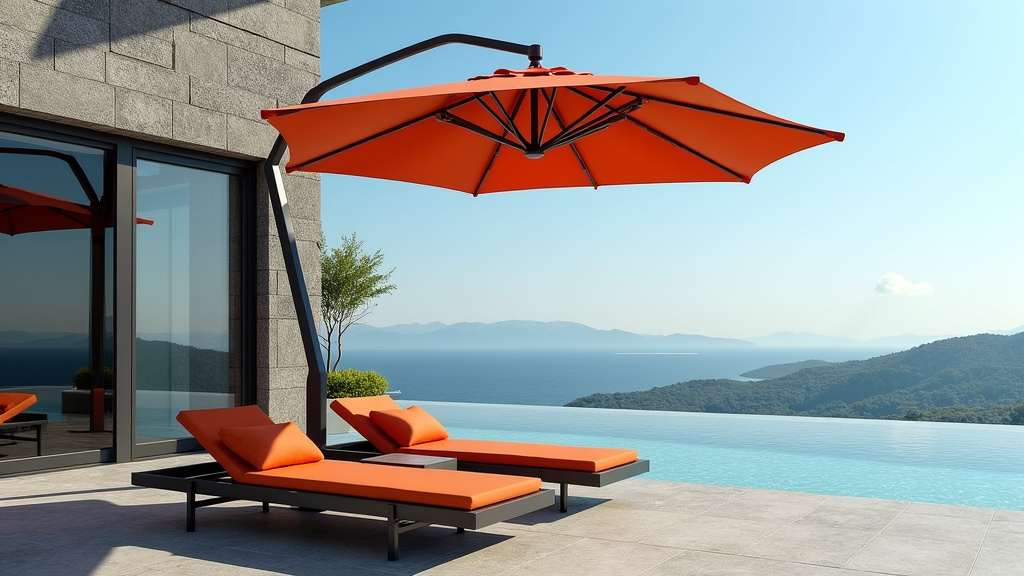
A cantilever umbrella, also known as an offset umbrella, stands out because its support pole is not in the middle. Instead, the pole is positioned to the side of the canopy. This clever design provides maximum usable space underneath the umbrella. You get an open area, free from obstructions.
Think of it like a crane. The base and main support are off to the side. The “arm” (or canopy structure) extends out to cover the desired area. This is why we often see these umbrellas shading large outdoor dining tables or lounge sets without a pole getting in the way.
How Cantilever Umbrellas Differ from Traditional Umbrellas
You’ve likely seen traditional patio umbrellas. They have a straight pole that goes right through the center of the canopy, often fitting into a hole in a table. Cantilever umbrellas break from this norm, offering a much more versatile shade solution.
We found that the main difference lies in their pole placement and functionality. Traditional umbrellas are great for small, fixed spaces. Cantilever umbrellas offer dynamic shading for larger, more flexible areas. It’s like comparing a stationary lamppost to a portable floodlight.
Key Design Elements
The design of a cantilever umbrella is all about stability and reach. We’ve identified several key components that make them work so well:
- Offset Pole: This is the defining feature. It positions the main support to the side.
- Sturdy Base: Because the pole is offset, a heavy, stable base is crucial to prevent tipping.
- Suspended Canopy: The canopy “hangs” from an arm that extends from the pole.
- Crank Mechanism: Most models use a crank to open and close the canopy easily.
- Tilting and Rotating Features: This allows you to adjust the shade as the sun moves.
The Many Benefits of Choosing a Cantilever Umbrella
When you’re looking for an outdoor shade solution, a cantilever umbrella brings a lot to the table. We found that their unique design offers several distinct advantages over other types of umbrellas. They truly enhance your outdoor living experience.
Consider the difference an open, clear space makes. No more awkwardly maneuvering around a pole in the middle of your patio. It’s about maximizing comfort and utility in your outdoor area.
Unobstructed Space and Versatility
Perhaps the biggest advantage is the unobstructed shade you get. With the pole out of the way, you have a completely clear area underneath the canopy. This is ideal for dining, entertaining, or simply relaxing without any visual or physical barriers.
We often find people love this for their outdoor kitchen setups or large seating arrangements. You can place the umbrella exactly where you need the shade, even if that’s directly over a hot tub or a play area for kids (National Safety Council).
Adjustability and Sun Protection
Cantilever umbrellas are champions of adjustability. Many models allow you to tilt the canopy forward and backward, or side to side. You can also rotate the entire canopy 360 degrees on its base. This means you can easily track the sun’s movement throughout the day.
This level of control ensures you always have optimal shade. No more repositioning chairs or moving your entire setup. Just a simple adjustment keeps you protected from harmful UV rays (CDC).
Enhanced Aesthetics for Your Outdoor Area
Beyond functionality, cantilever umbrellas often bring a modern and sophisticated look to your patio or deck. Their sleek design and ability to “float” above your furniture can create a truly upscale ambiance. We’ve seen how they can become a focal point, adding a touch of elegance.
They can transform a simple patio into a luxurious outdoor oasis. Many come in various colors and fabrics, allowing you to match your existing outdoor decor perfectly.
Key Features to Look for in a Cantilever Umbrella
Not all cantilever umbrellas are created equal. When you’re shopping for one, it’s helpful to know what features make a difference. We’ve done our research and found that focusing on these elements will lead you to a best cantilever umbrellas.
Think about how you’ll use it and what your local weather is like. These factors will guide your decisions about material and stability.
Canopy Material and Size
The canopy is the part that provides the shade, so its material is very important. You want a fabric that is UV-resistant and fade-resistant. We found solution-dyed acrylics are often recommended for their longevity and color retention. Look for ratings that indicate good UV protection. Our guide to the best fabric for outdoor cushions provides more details on why solution-dyed acrylics are a top choice for durability and color retention.
Canopy size should match your space. A larger umbrella is needed for a big dining set. Measure your area to ensure adequate coverage. A 10-foot or 11-foot canopy is common for many patios.
Frame Construction and Base Stability
The frame and pole material dictate the umbrella’s strength and durability. Aluminum or steel frames are common, with aluminum being lighter and rust-resistant. Steel is heavier but can be prone to rust if not properly coated.
The base is critical for a cantilever umbrella. It must be heavy enough to keep the umbrella stable, especially in breezy conditions. Bases can be weighted with sand, water, or concrete pavers. Some are designed to be bolted down for extra security (Consumer Product Safety Commission).
Important Stability Considerations
- Base Weight: Aim for a base weight of at least 150-200 pounds for larger umbrellas.
- Ventilation: A vented canopy helps release wind pressure, reducing the risk of tipping.
- Securing Options: Some bases allow for bolting to a deck or patio.
- Storage: Consider how you’ll store or secure the umbrella during high winds or off-season.
Ease of Operation and Additional Features
A good cantilever umbrella should be easy to use. Look for a smooth crank mechanism for opening and closing. The tilt and rotation features should also operate without excessive force.
Some models come with extra features that you might appreciate. We’ve seen built-in LED lights for evening ambiance, or even integrated speakers. A protective cover is also a valuable accessory, extending the life of your umbrella.
Maintaining Your Cantilever Umbrella for Longevity
Like any outdoor furnishing, your cantilever umbrella will last longer with proper care. A little maintenance goes a long way in preserving its appearance and functionality. We’ve gathered some simple tips to help you keep your umbrella in top shape.
Regular cleaning and smart storage can significantly extend its lifespan. Think of it as protecting your investment and ensuring countless hours of shaded enjoyment.
Cleaning and Care Tips
Regular cleaning prevents mildew and keeps the fabric looking fresh. We recommend cleaning the canopy periodically, especially after pollen season or heavy rain. Here’s a quick checklist:
- Brush off loose dirt: Use a soft brush or broom.
- Mix a cleaning solution: Mild soap and warm water work well (e.g., dish soap).
- Gently scrub the canopy: Use a soft cloth or sponge.
- Rinse thoroughly: Make sure to remove all soap residue.
- Allow to air dry completely: Do this before closing or storing to prevent mildew.
- Clean the frame: Wipe down the pole and frame with a damp cloth.
Storage and Protection
When not in use, especially during strong winds or the off-season, proper storage is crucial. We often advise collapsing and covering your umbrella. A good quality umbrella cover protects against dust, dirt, and UV degradation.
If you live in an area with harsh winters, consider storing the entire umbrella indoors. Detaching the canopy and storing the base separately can also be an option. This prevents unnecessary wear and tear from extreme weather conditions.
Conclusion
You now understand the unique advantages of a cantilever umbrella. Its offset pole design provides unobstructed shade and incredible flexibility. We’ve shown you how features like adjustable tilt and rotation offer superior sun protection for your outdoor spaces. By choosing the right canopy material and a sturdy base, you ensure both durability and style.
Proper maintenance will keep your investment looking great for years to come. Remember, a cantilever umbrella transforms your patio into a more functional and aesthetically pleasing area. Now, you’re ready to select the perfect model to enhance your outdoor living experience.
Frequently Asked Questions
Are cantilever umbrellas good in wind?
Cantilever umbrellas can be good in light to moderate winds, especially those with vented canopies. However, they are generally less stable than traditional center-pole umbrellas. Always close your cantilever umbrella in strong winds to prevent damage.
How much space do I need for a cantilever umbrella?
You need enough space for the canopy to extend fully without hitting obstacles. Also, consider the area behind the pole for the umbrella’s base and mechanism. Measure your desired shade area and compare it to the umbrella’s dimensions.
Can I leave a cantilever umbrella open all the time?
We recommend closing your cantilever umbrella when not in use, especially overnight or during windy conditions. This protects the canopy fabric from unnecessary wear and tear. It also helps prevent potential damage from unexpected gusts of wind.
What is the best weight for a cantilever umbrella base?
For most larger cantilever umbrellas (10-12 feet), we recommend a base weight of at least 150-250 pounds. Heavier bases provide greater stability, especially when the canopy is fully extended or tilted. Always check the manufacturer’s specific recommendations for base weight.
Are cantilever umbrellas difficult to assemble?
Most cantilever umbrellas are designed for straightforward assembly, though some larger models may require two people. Instructions typically involve attaching the pole to the base and then mounting the canopy arm. We find that the most challenging part is often filling and positioning the heavy base.