How to Fill an Umbrella Base with Water vs Sand?
On this page (8 sections)
When deciding how to fill your umbrella base, both water and sand work. Water is lighter to carry and easier to drain. Sand offers more weight and stability, especially in windy areas.
Choosing between water and sand depends on your specific needs. We found that for temporary use or easy storage, water is a great choice. If you need long-term stability and don’t plan on moving it often, sand might be better.
- Water is easy to fill and drain.
- Sand provides more weight for windy days.
- Consider how often you’ll move the umbrella.
- Think about the climate where you live.
- Both options are budget-friendly.
Let’s break down the pros and cons of each so you can pick the perfect filling for your umbrella base.
“`htmlChoosing the Right Fill for Your Patio Umbrella Base
You’ve got a sturdy umbrella base, but it’s feeling a little light. It’s time to give it some weight. But should you go with water or sand? Both are popular choices. Each has its own set of advantages. We’ve looked into it, and the best option really depends on what you need. Let’s dive into the details to help you make the perfect choice for your patio.
Understanding the Basics: Water vs. Sand
Your umbrella base is essentially a container. It needs a filling to add weight. This weight keeps your umbrella from tipping over. Wind is the main enemy here. A good, heavy base is your first line of defense. Water and sand are the two most common fillers. They are both cheap and easy to find. But they behave very differently. Your umbrella base needs a filling to add weight.
Water as an Umbrella Base Filler
Water is often the first thing people think of. It’s readily available and cheap. Most umbrella bases designed for water have a hollow core. You simply unscrew a cap and pour. It’s a pretty straightforward process. You can use regular tap water for this. For many people, this is enough. It provides decent stability.
The Advantages of Using Water
One of the biggest pluses is how easy it is to fill and drain. If you need to move your umbrella, you can just tip the base. All the water flows out quickly. This makes it very portable. We found that for seasonal use, like a summer patio, this is a huge benefit. You can store the empty base easily during the off-season. It’s also very budget-friendly. You’re basically using free water!
Water also has a bit of give. If your umbrella pole bumps against the edge, it’s less likely to cause damage. It’s a bit forgiving. Many manufacturers design their bases specifically for water. They often have built-in spouts or wide openings.
The Disadvantages of Using Water
However, water isn’t perfect. Its main drawback is its weight, or lack thereof compared to sand. Water weighs about 8.3 pounds per gallon. While this is decent, it might not be enough for very large umbrellas or extremely windy areas. We’ve seen reports of umbrellas tipping even with water. This can be dangerous.
Another issue is temperature. In freezing climates, water can freeze. Frozen water expands. This can crack or even break your umbrella base. You’ll need to drain it completely before winter. Also, over time, water can get a bit stagnant. Algae can grow, making it look murky. Some people add a bit of salt or bleach to prevent this. But you need to be careful with chemicals around your patio.
Sand as an Umbrella Base Filler
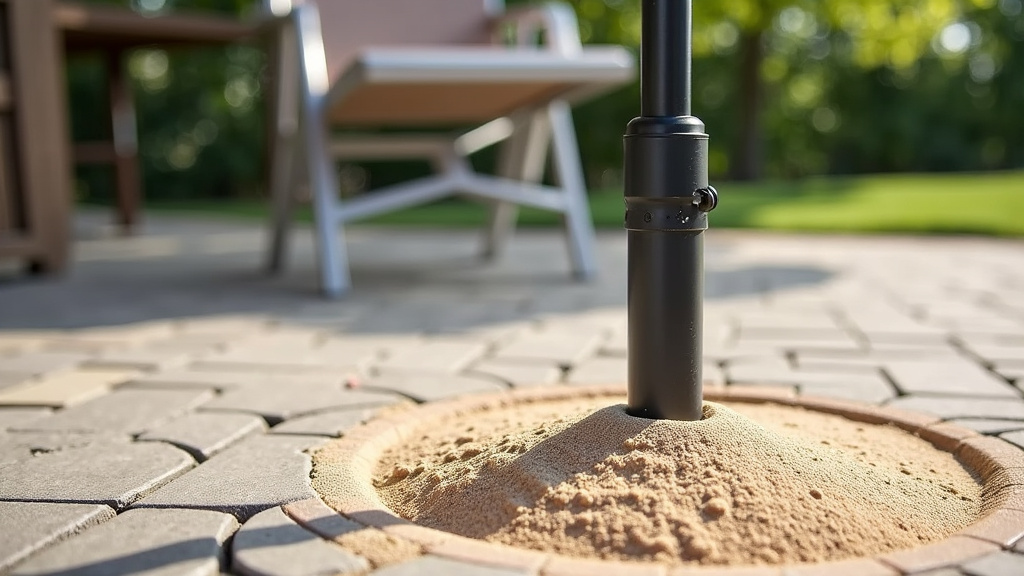
Sand is the other major contender. It’s known for its density and stability. If you’ve ever seen a playground or a construction site, you know sand is heavy. Filling an umbrella base with sand is a bit more involved than with water. You’ll need to buy sand, usually play sand or contractor sand. Then, you’ll need a funnel or scoop to get it into the base. It can be a messy job.
The Advantages of Using Sand
The biggest advantage of sand is its weight and stability. Sand is much denser than water. A gallon of sand can weigh up to 13 pounds. This extra weight makes a big difference. For large patio umbrellas, especially those on poles that extend higher, sand offers superior resistance to tipping. Many experts recommend sand for windy locations (The Spruce).
Sand doesn’t freeze and expand. So, you don’t have to worry about cracking the base in cold weather. You can leave it filled year-round if you choose. This makes it a very low-maintenance option. Once it’s in, it’s in. You rarely need to adjust it.
The Disadvantages of Using Sand
The primary downside is portability. Once filled, sand is very heavy. Moving an umbrella base filled with sand can be a real challenge. It’s not something you’ll want to do often. If you plan to rearrange your patio frequently, sand might not be the best choice. Also, getting sand into the base can be a dusty, messy affair. You might need to clean up afterwards.
Sand can also hold moisture. If water gets into the base and can’t drain, it can lead to mold or rust. Some bases are designed with drainage holes, but if they get clogged, you might have issues. If you live in a very humid or rainy climate, this is something to consider. It can also be more expensive upfront if you have to buy bags of sand.
Comparing Water and Sand: A Quick Look
Let’s put it side-by-side. This might make your decision easier. Here’s a simple comparison table.
| Feature | Water | Sand |
|---|---|---|
| Ease of Filling | Very Easy | Messy, requires tools |
| Ease of Draining/Moving | Very Easy | Difficult, heavy |
| Weight/Stability | Moderate | High |
| Cost | Very Low (often free) | Low to Moderate (cost of sand) |
| Freezing Risk | High (can crack base) | None |
| Maintenance | Occasional cleaning, need to drain in winter | Very low, but check for moisture issues |
When to Choose Water for Your Umbrella Base
You should probably go with water if you are looking for convenience. If you plan to move your umbrella around your yard often, water is your friend. Think about parties where you need to shift the shade. Or if you store your patio furniture away in the winter, draining water is simple.
Water is also a great option for smaller umbrellas. A standard 7-foot patio umbrella might do just fine with a water-filled base. It’s also ideal if you live in a climate that rarely experiences freezing temperatures. And, of course, if you’re on a tight budget, water is hard to beat.
When to Choose Sand for Your Umbrella Base
If stability is your number one concern, sand is likely the better choice. Do you live in an area with frequent strong winds? Is your umbrella large and tall, perhaps 9 feet or more? In these situations, the extra weight of sand provides much-needed security. We found that many homeowners in coastal areas or on open plains opt for sand (Consumer Reports).
If you plan to set up your umbrella and leave it in the same spot for the entire season, sand is ideal. You won’t have to worry about moving it. Plus, if you get freezing temperatures, sand eliminates the risk of your base cracking from ice expansion. It’s a set-it-and-forget-it kind of solution.
A Quick Checklist for Your Decision
Still on the fence? Ask yourself these quick questions. They might help clarify your needs:
- How windy is it where you live?
- What size is your patio umbrella?
- How often do you plan to move the umbrella base?
- Do you need to store the base in the winter?
- What’s your budget for filling material?
- Are you concerned about freezing temperatures cracking the base?
Conclusion
Choosing between water and sand for your umbrella base comes down to your specific patio needs. If portability and ease of setup are your priorities, especially for seasonal use or smaller umbrellas, water is your best bet. For maximum stability in windy conditions or for larger umbrellas that will stay put, sand offers superior weight and year-round peace of mind. Consider your climate and how often you’ll be moving things before you fill it up. With these factors in mind, you can confidently select the right filling to keep your umbrella secure and your patio enjoyable.
Frequently Asked Questions
Can I mix water and sand in my umbrella base?
While technically possible, mixing water and sand isn’t generally recommended. It can create a muddy, heavy sludge that’s difficult to drain and may not offer the stability benefits of either pure water or pure sand. It’s usually best to choose one or the other for optimal results.
How much water or sand do I need for my umbrella base?
The amount needed depends entirely on the size and capacity of your specific umbrella base. Check the manufacturer’s instructions if available. As a general rule, you’ll want to fill it enough to provide substantial weight without overfilling, which could cause leaks or instability.
What kind of sand is best for an umbrella base?
Play sand or contractor sand are good choices. Avoid coarse sand or sand with large pebbles, as these can clog drainage holes or be difficult to get into the base evenly. You want a fine, consistent grain for best results.
Can I use something other than water or sand?
Some people use concrete, but this is a permanent solution that makes moving the base impossible. For most situations, water or sand are the most practical and recommended options due to their ease of use and the ability to drain them if needed.
How do I prevent mold or algae in a water-filled base?
To prevent stagnation, you can add a small amount of non-toxic algaecide or even a splash of bleach to the water. Some people also find that adding a bit of salt can help. Be sure to check product recommendations for umbrella bases if using additives.