How to Anchor a Gazebo to a Deck?
On this page (8 sections)
You can absolutely anchor a gazebo to a deck! The best way to anchor a gazebo to a deck involves using heavy-duty mounting brackets and lag screws designed for outdoor use. This ensures your gazebo stays firmly in place, even in windy conditions.
Anchoring is essential for safety and stability. Without proper anchoring, your beautiful gazebo could shift or even tip over. Many experts agree that using the right hardware is key to a secure and long-lasting installation. The same care applies when you anchor patio furniture.
- Use strong, outdoor-rated mounting brackets.
- Lag screws are your best bet for a secure hold.
- Ensure your deck structure can support the weight.
- Check local building codes before you start.
Let’s walk through exactly how to anchor your gazebo to your deck, step by step.
Securing Your Gazebo to a Deck: A Step-by-Step Guide
Anchoring your gazebo to a deck might seem daunting, but it’s a necessary step. A well-anchored gazebo ensures it stands firm against wind and weather. You want your backyard oasis to be safe and stable. We’ll walk you through the process so you can relax under your gazebo with peace of mind.
Understanding Gazebo Anchoring Needs
Why Proper Anchoring is Essential
Think of anchoring your gazebo like securing a boat to a dock. Without it, even a gentle breeze could cause problems. A gazebo that isn’t properly secured can shift, lean, or even tip over. This isn’t just about appearance; it’s about safety for you and your guests. Research shows that unsecured structures are a significant risk during storms (National Weather Service).
Your deck also plays a role. It needs to be strong enough to support the gazebo’s weight and the forces acting upon it. We’ll cover how to check this later. For now, know that secure anchoring protects your investment and prevents accidents.
Types of Gazebo Foundations and Deck Considerations
Gazebos can sit on various foundations, but when your deck is the base, you have specific needs. Wooden decks are common, and their structure dictates how you’ll anchor. You need to consider the joist and beam placement beneath the deck boards. These are the points where you’ll get the most secure connection.
Some gazebos have pre-built base frames, while others are assembled on-site. The key is to connect the gazebo’s frame directly to the deck’s structural elements. Trying to anchor only to the deck boards themselves is generally not strong enough. You need to reach the sturdier substructure.
Gathering Your Tools and Materials
Essential Hardware for Gazebo Anchoring
Before you start, make sure you have the right hardware. This is non-negotiable for a strong anchor. You’ll need heavy-duty mounting brackets. These are often L-shaped or U-shaped metal plates designed to connect two structural elements. Look for brackets made of galvanized steel or stainless steel; they resist rust and corrosion from outdoor exposure.
Next, you’ll need lag screws. These are large screws with a blunt end, designed for heavy-duty fastening into wood. Ensure they are long enough to go through your deck boards, any relevant framing, and into a solid joist or beam. They should also be coated for outdoor use, just like the brackets.
You might also need washers. Washers distribute the pressure from the lag screw head over a larger area, preventing the screw from digging into the wood too much. Drill bits will be needed for pre-drilling holes. A socket wrench or ratchet is essential for tightening the lag screws.
Recommended Tools for the Job
Here’s a quick checklist of tools you’ll want on hand:
- Drill with variable speed and torque settings.
- Drill bits appropriate for pre-drilling pilot holes for your lag screws.
- Socket wrench set or adjustable wrench to tighten lag screws.
- Measuring tape for accurate placement.
- Pencil or marker for marking drill points.
- Level to ensure the gazebo is positioned correctly.
- Safety glasses to protect your eyes from sawdust and debris.
- Work gloves to protect your hands.
Having all your tools ready means less stopping and starting. It makes the process much smoother. It’s like getting all your ingredients prepped before you start cooking!
Pre-Installation Checks and Preparation
Assessing Your Deck’s Structural Integrity
This is a vital step before you even think about anchoring. You need to confirm your deck can handle the load. Deck joists are typically spaced 16 inches apart on center. You’ll want to find these joists. They are the backbone of your deck.
Look for areas where the deck boards might be softer or show signs of rot. Tap on the wood with a hammer; if it sounds hollow or crumbly, that section might be compromised. Many building codes require decks to be built on substantial footings and with adequately sized joists and beams. If you’re unsure about your deck’s strength, it’s wise to consult a professional contractor.
Locating Deck Joists and Beams
You can often find your deck joists by looking at the railing posts or by tapping on the deck surface. Another method is to look at the edge of the deck where it meets the house or a staircase. You should see the ends of the joists there. Use a stud finder designed for wood if you’re having trouble locating them.
Once you find a joist, measure 16 inches or 24 inches (depending on your deck’s construction) from the edge or another joist. Mark this line. Repeat this process across the area where your gazebo will sit. You want to anchor into these solid structural members.
Understanding Local Building Codes and Permits
Before you buy any hardware or start drilling, check your local building codes. Some areas have specific regulations for attaching structures like gazebos to existing decks. You might need a permit, especially if the gazebo is a permanent fixture or quite large.
Ignoring codes can lead to fines or require you to dismantle your gazebo later. The International Code Council (ICC) provides guidelines, but your local municipality has the final say. It’s always better to be safe and compliant. A quick call to your local building department can save you a lot of trouble.
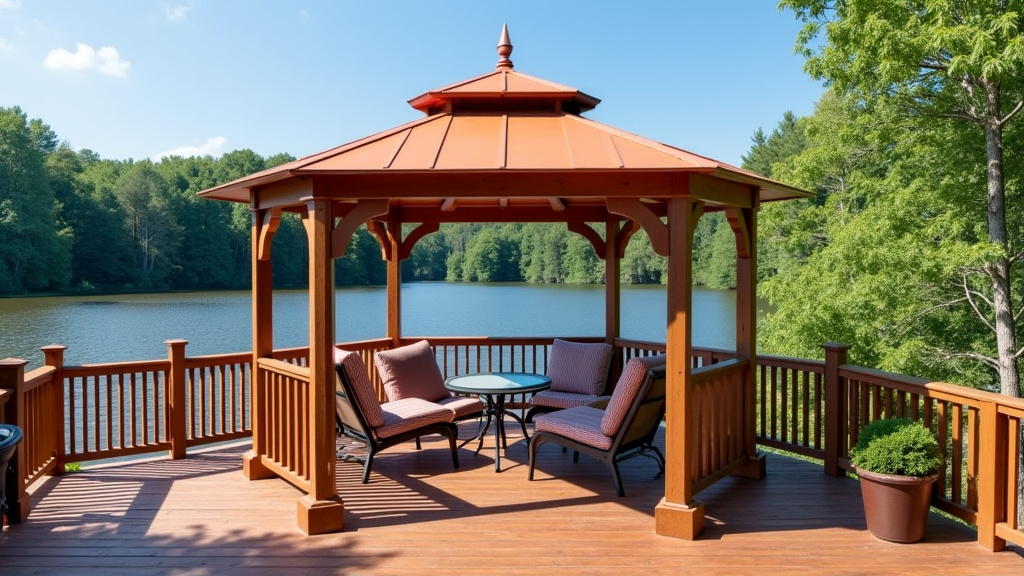
Step-by-Step Anchoring Process
Positioning the Gazebo on the Deck
Carefully move your gazebo or its base frame into its final position on the deck. Use a level to ensure it’s sitting evenly. If your deck isn’t perfectly level, you might need to use shims under the gazebo’s feet. However, aim for the most stable and level spot you can find.
Double-check the placement against your marked joist lines. You want the gazebo’s corner posts or base supports to align with these strong points. If they don’t align perfectly, you may need to slightly adjust the gazebo’s position or consider adding blocking between joists to create a fastening point.
Attaching Mounting Brackets
For each corner or support point of your gazebo, attach a mounting bracket. Place the bracket so it can connect the gazebo’s base to the deck’s joist or beam. You might need to hold the bracket in place while you mark drill holes.
Many brackets have multiple holes. Ensure you use holes that will align with the joist or beam underneath. Pre-drill pilot holes for the bracket screws. These holes should be slightly smaller than the diameter of the screws you’re using. This makes driving the screws easier and prevents the wood from splitting.
Secure the bracket to the gazebo’s frame first, if applicable. Then, prepare to attach it to the deck. If the bracket needs to span across a joist, ensure it is centered over the joist for maximum strength.
Drilling Pilot Holes into the Deck Structure
Now, you’ll drill into the deck itself. With the bracket in place, mark the center of each hole onto the deck board and, more importantly, into the joist or beam below. Remove the bracket temporarily if needed to ensure you’re drilling into the structural wood.
Use a drill bit that is about two-thirds the diameter of your lag screws. For example, if you are using 3/8-inch lag screws, use a 1/4-inch drill bit. This creates a pilot hole that guides the screw and ensures a snug fit without weakening the wood too much. When drilling, try to keep the drill as perpendicular to the surface as possible.
Drill deep enough to accommodate the full length of the lag screw. Many experts recommend drilling a pilot hole that is at least as deep as the screw will penetrate the joist or beam (U.S. Forest Products Laboratory).
Securing the Gazebo with Lag Screws
With pilot holes drilled, you’re ready to drive the lag screws. Place the bracket back into position, aligning the holes. Insert a washer onto the lag screw, if using one. Then, insert the lag screw through the bracket and into the pilot hole.
Use your socket wrench or ratchet to tighten the screws. You want them snug, but don’t overtighten to the point where you strip the threads or damage the wood. The gazebo should feel firmly attached to the deck. Repeat this process for all mounting points and all lag screws.
Reinforcement Options for Extra Stability
Depending on your gazebo’s size and your location’s typical weather, you might consider additional reinforcement. This could involve using corner braces, which are triangular metal pieces that add significant stability to right-angle joints.
Another option is to install additional blocking between deck joists. If your gazebo’s feet land between joists, you can add short pieces of lumber between the joists to create a solid anchoring point. This is especially helpful for larger or heavier gazebos. For areas prone to very high winds, some people use earth anchors in conjunction with deck anchoring, though this is often more complex and may require professional installation.
| Hardware Type | Primary Use | Key Benefit | Considerations |
|---|---|---|---|
| Galvanized/Stainless Steel Brackets | Connecting gazebo frame to deck structure | Resists rust and corrosion, provides strong connection point | Choose appropriate shape (L, U, flat) for your gazebo design |
| Outdoor-Rated Lag Screws | Fastening brackets to deck joists/beams | High-strength connection for heavy loads | Ensure proper length and diameter for your structure |
| Washers | Under lag screw heads | Distributes pressure, prevents wood damage | Use with lag screws for a more secure fit |
| Deck Screws (for bracket to gazebo frame) | Attaching bracket to gazebo’s own frame | Appropriate for lighter structural connections on the gazebo itself | Use outdoor-rated screws; size depends on gazebo material |
Final Checks and Ongoing Maintenance
Ensuring a Secure and Stable Installation
Once everything is tightened, give the gazebo a gentle push. It shouldn’t wobble or shift. Check that all the lag screws are firmly seated. A stable gazebo is a safe gazebo. This is the moment of truth after all your hard work.
Walk around the perimeter. Look for any gaps or signs of movement. If anything feels loose, go back and tighten those connections. Your goal is a structure that feels like it’s grown out of your deck, not just placed on top of it.
Routine Inspection and Maintenance Tips
Your gazebo’s stability isn’t a one-time setup. Wood expands and contracts with temperature and moisture changes. This can loosen connections over time. We found that a quick check once or twice a year is usually sufficient.
Inspect the anchor points regularly. Look for any signs of rust on the hardware or degradation of the wood around the screws. Tighten any screws that have loosened. If you notice any signs of rot or significant wear, address it promptly. Keeping your gazebo secure ensures it remains a safe and enjoyable space for years to come.
Conclusion
Anchoring your gazebo to your deck is a vital step for safety and longevity. You’ve learned that using heavy-duty brackets and lag screws is key, and it’s essential to connect directly to your deck’s structural joists or beams. Remember to always check your deck’s integrity and local building codes before you begin. With careful preparation and the right hardware, you can ensure your gazebo is a stable and secure sanctuary for years of enjoyment. Your next step? Gather your materials and get ready to firmly attach your beautiful gazebo!
Frequently Asked Questions
How do I know if my deck can support a gazebo?
You’ll need to assess your deck’s structural integrity by checking for rot and ensuring it’s built with adequately sized joists and beams. Tapping on the wood can reveal signs of weakness. If you’re unsure, consulting a professional contractor is always a wise decision to guarantee your deck’s load-bearing capacity.
What if the gazebo’s posts don’t line up with my deck joists?
If your gazebo’s corner posts or base supports don’t perfectly align with your deck joists, you have a couple of options. You can slightly adjust the gazebo’s position, or you may need to add blocking—short pieces of lumber—between the joists to create a secure fastening point directly underneath the post.
Can I anchor my gazebo to the deck boards alone?
No, anchoring solely to the deck boards is not recommended. Deck boards are not designed to bear the lateral or uplift forces that a gazebo might experience. You need to connect directly to the sturdier substructure, such as the joists and beams, for a secure and stable anchor.
What size lag screws should I use for anchoring a gazebo?
The size of lag screws needed will depend on the weight of your gazebo and the structure of your deck. Generally, 3/8-inch or 1/2-inch diameter lag screws that are long enough to penetrate the deck boards and several inches into a joist or beam are recommended. Always check your hardware’s weight rating and consult your gazebo manufacturer’s guidelines.
How often should I check the anchors on my deck-mounted gazebo?
It’s a good practice to inspect your gazebo’s anchor points at least once or twice a year. Wood can shift due to weather changes, and hardware can loosen over time. Look for any signs of rust, wood degradation, or loose connections and tighten as needed to maintain stability.