Do You Need an Umbrella Base Weight?
On this page (6 sections)
Yes, you absolutely need an umbrella base weight for your patio umbrella. Without one, your umbrella can become a dangerous projectile in even a light breeze, potentially causing damage or injury. Safety is paramount when using any outdoor furniture.
A proper umbrella base weight keeps your umbrella firmly in place. This prevents it from tipping over or flying away unexpectedly. We found that most patio umbrellas require some form of weighted support, especially freestanding models. Don’t underestimate the power of wind; it’s better to be safe than sorry.
- An umbrella base weight is essential for stability.
- It prevents your umbrella from blowing away.
- Safety is the main reason for using one.
- Different umbrellas need different weight amounts.
- You have several options for weighting your base.
Let’s walk through exactly why these weights are so important and help you choose the right one for your outdoor space.
Why Is an Umbrella Base Weight So Important?
An umbrella base weight isn’t just an accessory; it’s a safety necessity. Imagine a sudden gust of wind turning your beautiful patio umbrella into a flying object. This isn’t just a minor inconvenience; it can be incredibly dangerous. We found that most outdoor umbrella accidents involve them blowing over or being carried away by the wind.
Think about it: an umbrella, even a small one, has a large surface area. This acts like a sail, catching any breeze. Without enough weight at its base, that breeze can easily lift it right out of its stand. This could lead to damage to property, injuries to people, or even worse. It’s a simple fix for a potentially serious problem.
The Dangers of an Unsecured Umbrella
You might think a light breeze is harmless, but even a gentle wind can create enough force to move an unweighted umbrella. We’ve seen reports of umbrellas hitting cars, breaking windows, and even striking people. It’s not a risk you want to take.
Property Damage
Picture your umbrella flying across your yard. What’s in its path? A glass table? Your neighbor’s new grill? Your car? The cost of repairs can quickly outweigh the small investment in a proper base weight. It’s much cheaper to prevent the problem than to fix the damage afterward.
Personal Injury
The most serious concern is always personal injury. A falling or flying umbrella, especially one with a heavy pole, can cause significant harm. Head injuries, cuts, and bruises are all possibilities. Your peace of mind, knowing your guests and family are safe, is priceless.
How Much Weight Do You Actually Need?
The amount of weight your umbrella needs isn’t a one-size-fits-all answer. It depends on several factors, including the size of your umbrella, whether it’s freestanding or goes through a table, and the typical wind conditions in your area. More weight is generally better, but there’s a practical limit.
We found that a good rule of thumb is to have at least 10 pounds of base weight for every foot of umbrella diameter. So, a 9-foot umbrella would ideally need at least 90 pounds of base weight. This is a starting point, and you might need more.
Factors Influencing Weight Requirements
Several elements play a role in determining the ideal weight for your umbrella base. Consider these points when making your choice.
Umbrella Size and Type
- Small umbrellas (6-7 ft): Often need 30-50 pounds. Good for bistro sets or small balconies.
- Medium umbrellas (8-9 ft): Typically require 50-70 pounds. Standard for most patio tables.
- Large umbrellas (10-11 ft): Need 70-100+ pounds. For larger seating areas or freestanding use.
- Cantilever/Offset umbrellas: These are trickiest. Because the pole is off to the side, they are much more susceptible to tipping. They often demand 120-300+ pounds of base weight. Don’t skimp here!
A freestanding umbrella will always need more weight than one going through a patio table. The table itself adds some stability, but it’s not enough on its own.
Wind Exposure and Location
Do you live in a windy area? Is your patio on a wide-open deck or a sheltered spot? Areas with higher wind exposure, like coastal regions or open fields, will naturally require more base weight. We’ve seen that umbrellas in these areas need the maximum recommended weight, if not more, to stay secure.
Can You Ever Have Too Much Weight?
While more weight is usually better for stability, there is a point where it becomes impractical. An overly heavy base can be difficult to move and might not fit under your table or in your desired space. The goal is to find the right balance between stability and usability.
Types of Umbrella Base Weights You Can Choose From
You have several options when it comes to weighting your umbrella. Each type has its own advantages and disadvantages in terms of cost, aesthetics, and ease of use. Choosing the right one depends on your specific needs and preferences.
Solid Bases
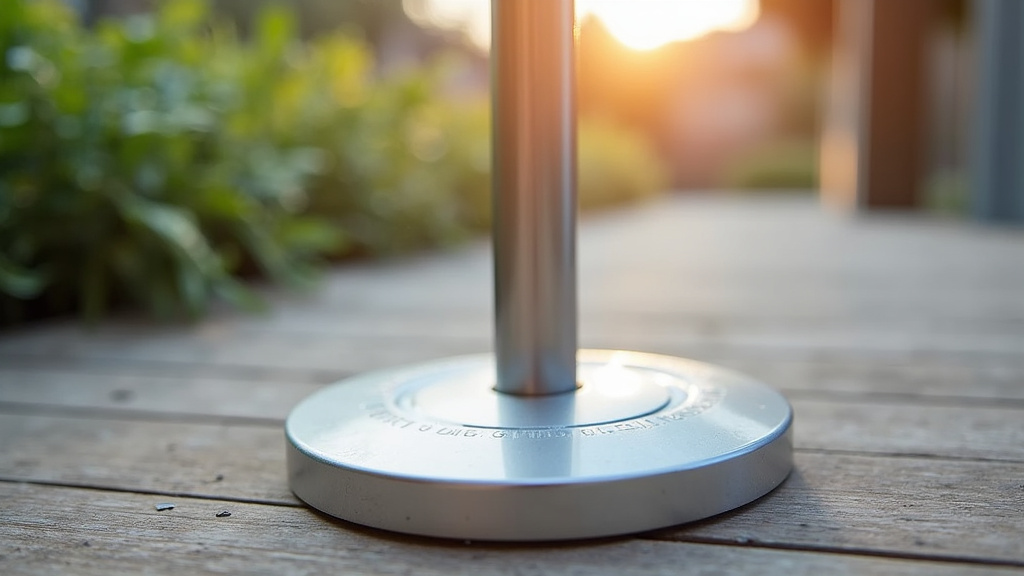
These are pre-made, solid weights, often made from concrete, steel, or cast iron. They are generally very durable and require no assembly or filling.
- Pros: Ready to use, very stable, often aesthetically pleasing.
- Cons: Can be very heavy to move, more expensive, might not fit all umbrella poles.
Fillable Bases (Water or Sand)
These bases are empty when you buy them and you fill them yourself. They are usually made from durable plastic or resin. Water is easier to fill but adds less weight; sand adds more weight but is harder to fill and empty.
- Pros: Lighter to transport when empty, adjustable weight (you choose how much to fill), generally more affordable.
- Cons: Can be messy to fill, water can freeze and crack the base in winter, sand can be hard to remove if you need to move it later.
Plate Weights and Sandbags
These are typically used for cantilever umbrellas or to add extra weight to an existing stand. Plate weights are flat, heavy disks that stack on the base. Sandbags are durable fabric bags you fill with sand and place over the cross-base.
- Pros: Highly adjustable weight, good for specific umbrella types (cantilever), relatively inexpensive for sandbags.
- Cons: Can be less aesthetically pleasing (sandbags), might trip people (plates), sandbags can eventually degrade.
| Base Type | Typical Weight Range | Best For | Key Feature |
|---|---|---|---|
| Solid | 30-90 lbs | Table Umbrellas, Small Freestanding | Ready to use, durable |
| Fillable (Water) | 50-100 lbs | Medium Freestanding | Easy to fill/empty |
| Fillable (Sand) | 100-250 lbs | Large Freestanding, Some Cantilever | Heavy duty, customizable |
| Plate/Sandbag | 50-400 lbs (combined) | Cantilever/Offset Umbrellas | Highly adjustable, adds extra weight |
Choosing the Right Base for Your Umbrella
Now that you know the options, how do you pick the perfect one? It boils down to assessing your needs, your umbrella’s requirements, and your budget. Don’t rush this decision; it’s an important safety choice.
Consider Your Umbrella’s Design
First, look at your umbrella. Is it a traditional market umbrella that goes through the center of a table? Or is it a large, offset cantilever umbrella that stands on its own? This is the most crucial piece of information for choosing a base.
For table umbrellas, you can often get away with a slightly lighter base, as the table offers some stability. However, for freestanding or cantilever umbrellas, you absolutely need a heavier, wider base to prevent tipping.
Assessing Your Outdoor Space and Budget
Next, think about where the umbrella will be placed. Is it on a deck, patio, or grass? Do you need to move it frequently? Also, what’s your budget? While safety is paramount, there are good options at various price points.
Checklist for Choosing Your Base Weight:
- What is the diameter of your umbrella? (e.g., 9 ft, 11 ft)
- Is it a center-pole or a cantilever/offset umbrella?
- Will it go through a patio table, or stand alone?
- What are the typical wind conditions in your area?
- Do you need to move the umbrella base often?
- What is your budget for the base weight?
By answering these questions, you’ll be well on your way to selecting a base that provides maximum stability and safety for your outdoor oasis. It’s a small investment for significant peace of mind.
Conclusion
You’ve seen why an umbrella base weight isn’t just an accessory; it’s a critical safety item for your outdoor space. Protecting your property and loved ones from a runaway umbrella is simple with the right support. Take a moment to evaluate your umbrella’s size, its placement, and your local wind conditions. This will guide you to the perfect amount and type of base weight.
Don’t wait for a windy day to discover you made the wrong choice. Invest in the right umbrella base weight today for peace of mind and a safer patio. You’ll be glad you did when the next breeze rolls through.
Frequently Asked Questions
Can I use a patio table alone to hold my umbrella?
While a patio table does offer some stability by holding the umbrella pole, it’s generally not enough on its own. Wind can still lift the umbrella and table together, or cause the umbrella to sway dangerously. Always add a base weight, even with a table.
Do I need to secure my umbrella base to the ground?
For most patio umbrellas, a heavy base weight is sufficient to keep it stable. However, for very large or cantilever umbrellas in extremely windy areas, you might consider anchoring the base to a deck or patio. This provides an extra layer of security.
How do I store my umbrella base weight in the off-season?
If you have a solid base, you can usually leave it outside year-round, though covering it can prolong its life. For fillable bases, we found it’s best to empty them for winter. Water can freeze and crack plastic bases, and sand can become damp and heavy.
Can I make my own umbrella base weight?
You can certainly create DIY solutions, such as filling buckets with concrete or using heavy pavers. While these can work, they might not be as aesthetically pleasing or as secure as purpose-built bases. Ensure any DIY option provides adequate weight and stability for safety.
What if my umbrella already came with a plastic base that fills with water?
Many umbrellas include these basic fillable bases. They are a good starting point, but often don’t provide enough weight, especially if you only use water. We suggest filling them with sand for more weight, or supplementing them with additional plate weights if needed for larger umbrellas.