
What Is an Offset Patio Umbrella?

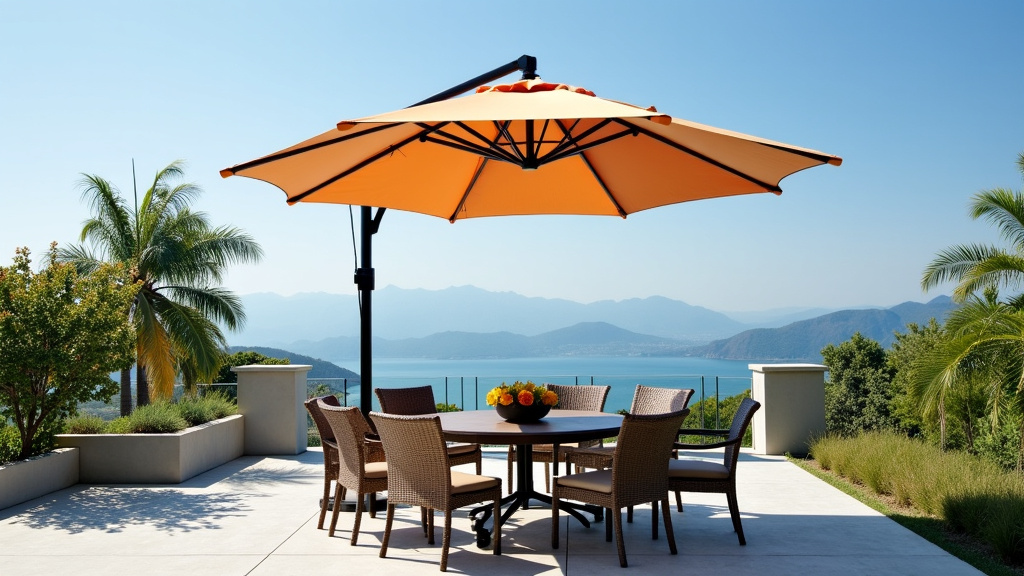
An offset patio umbrella is a type of shade structure designed to hang over your seating area. Its pole is positioned to the side, allowing the canopy to float above your furniture. This makes it perfect for creating shade without a pole in the middle of your patio, offering unobstructed views and more flexible furniture arrangements.
Unlike traditional patio umbrellas, the offset design uses a cantilevered arm. This allows you to position the umbrella where you need it most. We found that this design is especially useful for covering dining sets or loungers. It provides shade exactly where you want it, keeping you cool and protected.
- An offset umbrella has a side pole, not a center one.
- This lets the canopy hang over your furniture.
- It’s great for clear, open patio spaces.
- Enjoy shade without a pole in your way.
Let’s dive into what makes an offset umbrella so popular and what you should consider when choosing one for your outdoor space.
Understanding the Cantilever Patio Umbrella
So, you’re looking for a way to add shade without the hassle of a center pole. An offset patio umbrella, also known as a cantilever umbrella, is your answer. It hangs over your patio furniture, providing a clear, unobstructed space below. This design is a game-changer for anyone wanting a more open feel to their outdoor living area.
Think of it like a modern art piece for your backyard. Instead of a traditional umbrella sticking straight up, the pole is off to the side. This allows the canopy to extend out like a beautiful wing, covering your dining table or lounge chairs perfectly. We found this flexibility incredibly useful for various patio setups.
How Does an Offset Umbrella Work?
The magic of an offset umbrella lies in its cantilevered arm. This arm extends from the base and supports the umbrella’s canopy. The base, which is heavy, sits off to the side of your seating area. This is what allows the canopy to float freely above your furniture. It’s a clever engineering solution for shaded outdoor living.
The pole is typically located at one edge of the canopy, not the center. This means you can position the shade exactly where you need it. Many designs also feature a tilting mechanism. This lets you adjust the angle of the canopy as the sun moves throughout the day. Research indicates that dynamic shade adjustment is key to consistent comfort (University of Michigan). You can follow the sun’s path without moving your furniture.
Benefits of Choosing an Offset Design
Why opt for an offset umbrella over a traditional one? The advantages are quite compelling. For starters, it creates a much cleaner look. Without a pole smack in the middle, your patio feels more spacious and inviting. We found this makes it ideal for entertaining guests.
You gain a lot of flexibility in furniture arrangement. Place your dining set, conversation pit, or pool loungers exactly where you want them. The umbrella will extend over them without interruption. This is a huge plus if you have a particularly shaped patio or a unique outdoor layout.
- Unobstructed Views: Enjoy your garden or scenery without a pole blocking your sightline.
- Maximized Shade Coverage: Position the canopy precisely over your seating area.
- Modern Aesthetics: Offset umbrellas often have sleek, contemporary designs.
- Versatile Placement: Works well over decks, patios, and even next to pools.
Offset Umbrella vs. Traditional Patio Umbrella
The primary difference, as we’ve touched upon, is the pole placement. Traditional umbrellas have a center pole. This pole goes through a hole in your patio table or stands independently in the center of your seating arrangement. Offset umbrellas, conversely, have a pole on the side.
This structural difference leads to very different user experiences. With a traditional umbrella, your furniture placement is often dictated by the umbrella’s central pole. You might have to arrange chairs around it. An offset umbrella frees you from these constraints. It offers more freedom and a more fluid design for your outdoor space.
Here’s a quick comparison:
| Feature | Offset Umbrella | Traditional Umbrella |
|---|---|---|
| Pole Placement | On the side, extending from a base off to the side. | In the center, under the canopy. |
| Furniture Arrangement | Highly flexible; pole doesn’t interfere. | Often dictated by the central pole. |
| Space Feel | More open and spacious. | Can feel more confined. |
| Ideal For | Dining sets, lounge areas, smaller spaces where a center pole is awkward. | Patio tables with built-in umbrella holes. |
Key Components of an Offset Umbrella
To really understand these shade structures, let’s break down their main parts. Knowing these will help you when you’re shopping around. We found that understanding the construction aids in making a better purchasing decision.
The Canopy
This is the fabric part that provides the shade. Canopies come in various shapes, most commonly square or rectangular, but round ones exist too. Materials vary widely, impacting durability and UV protection. Look for fabrics like solution-dyed acrylic or polyester. These are known for their resistance to fading and mildew. Many are treated for water repellency too, offering protection from light rain.
The Cantilever Arm
This is the mechanical arm that extends from the pole. It supports the canopy and allows it to be positioned over your furniture. These arms are usually made of sturdy aluminum or steel. The quality of the arm mechanism is critical for smooth operation and long-term durability. We found that a well-built arm feels secure and operates without wobbling.
The Pole and Base
The pole is what anchors the cantilever arm. It’s usually made of durable materials like aluminum. The base is the foundation. It’s designed to be heavy and stable. Offset umbrella bases are often filled with sand or water, or they are solid weighted structures. This weight is crucial to prevent the umbrella from tipping over, especially in windy conditions. Many bases have wheels for easier repositioning, which is a nice feature.
Factors to Consider When Buying
Choosing the right offset umbrella involves looking beyond just the style. Several practical factors will influence your satisfaction. We’ve put together a checklist to help guide your selection process.
- Size Matters: Measure your patio and seating area. Ensure the canopy size is adequate for the shade you need. An umbrella that’s too small won’t cover enough space. Too large, and it might overwhelm your area.
- Material Quality: Invest in a frame made of durable, rust-resistant material like powder-coated aluminum. The canopy fabric should be high-quality and UV-resistant.
- Stability and Weight: The base must be sufficiently heavy or well-weighted. This is non-negotiable for safety. Many manufacturers provide recommended base weights for different umbrella sizes.
- Ease of Use: Look for features like crank mechanisms or pulley systems that make opening and closing simple. Tilt and rotation functions add significant usability.
- Wind Resistance: No umbrella is completely windproof. However, some designs are more stable than others. Check for features like ventilation in the canopy to reduce wind uplift. Always close your umbrella in strong winds.
- Your Budget: Offset umbrellas can range significantly in price. Determine how much you’re willing to spend and find the best option within that range.
Installation and Setup: What to Expect
Setting up an offset umbrella typically requires a bit more effort than a traditional one. The main task is usually assembling and weighting the base. Many bases are designed to be filled with sand or water on-site. This can be a bit messy but is essential for stability.
Some higher-end models come with pre-weighted bases or specialized mounting systems. Always follow the manufacturer’s instructions carefully. We found that having a second person to help can make assembly much easier, especially when handling the larger parts like the canopy and arm. Properly securing the base is the most critical step for safety and longevity.
Maintenance for Longevity
To ensure your offset umbrella lasts for many seasons, regular maintenance is key. Keeping it clean and protected will preserve its appearance and functionality.
Cleaning the Canopy
Most fabric canopies can be cleaned with mild soap and water. Gently scrub with a soft brush or cloth. Rinse thoroughly and allow it to air dry completely before closing. Avoid harsh chemicals that can damage the fabric’s protective coatings. Many manufacturers offer specific cleaning product recommendations (Sunbrella, for example, has extensive care guides). Always check your umbrella’s care instructions.
Storing Your Umbrella
When not in use, especially during harsh weather or the off-season, it’s best to close and cover your umbrella. Many come with a protective cover. If yours doesn’t, consider purchasing one. Storing it indoors during the winter months can significantly extend its lifespan. This protects the fabric and the mechanical parts from extreme temperatures and moisture.
Conclusion
You’ve now got a clear picture of what makes an offset patio umbrella a fantastic choice for your outdoor space. Its unique cantilever design offers superior shade flexibility, letting you position coverage precisely where you need it without a bothersome center pole. We’ve seen how this translates to more open patios and smarter furniture layouts. By considering size, material quality, and stability, you’re well on your way to finding the perfect umbrella to enhance your outdoor living. Ready to enjoy cooler, more comfortable days outside? Start measuring your patio and browsing for your ideal offset umbrella today.
Frequently Asked Questions
Do offset umbrellas need a special base?
Yes, offset umbrellas require
