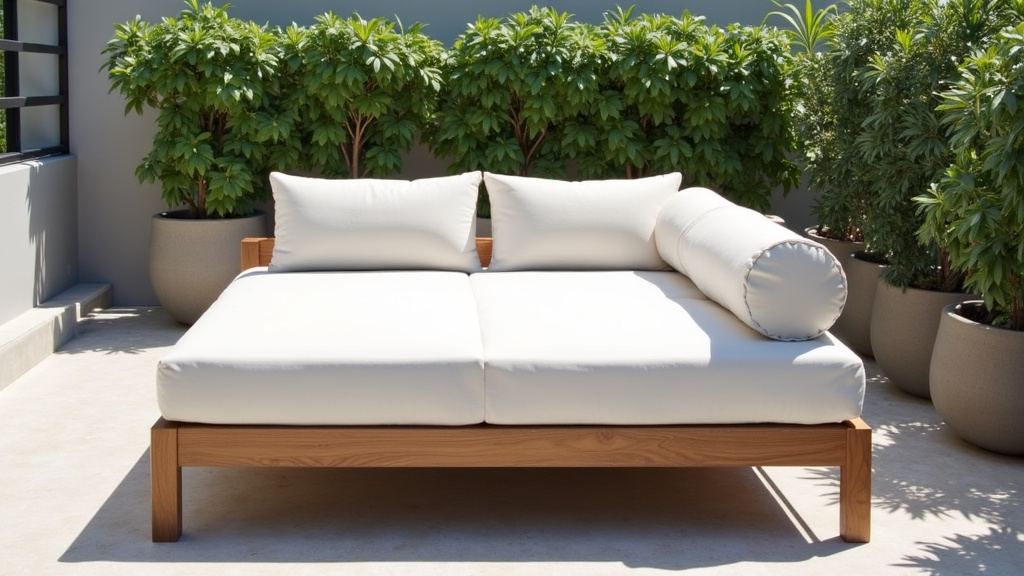
The best material for an outdoor daybed is one that is durable, weather-resistant, and low-maintenance, with top choices being teak, aluminum, and high-quality synthetic resin wicker. This answer depends largely on your climate and how much upkeep you’re willing to do.
Your choice of material is critical because it determines how long your daybed will last and how it handles sun, rain, and humidity. We found that experts consistently recommend materials that can resist fading, rust, and moisture damage without requiring constant care.
Teak is naturally oil-rich, making it the gold standard for weather resistance.
Aluminum frames are lightweight, won’t rust, and are easy to clean.
Synthetic resin wicker is a popular, comfortable, and durable woven option.
Avoid untreated woods like pine, which will warp and rot outdoors.
Always check the frame material and fabric cushions for outdoor suitability.
Let’s walk through exactly what makes each of these materials the best choice for your space, so you can pick the perfect spot to relax.
Top Materials for Outdoor Daybeds: A Complete Guide
When shopping for an outdoor daybed, the material is everything. We found that teak, aluminum, and high-quality synthetic resin wicker consistently perform best in outdoor settings. Each offers a unique blend of durability and style for your backyard oasis.
Teak: The Natural Powerhouse for Outdoor Furniture
Teak is often called the gold standard for outdoor furniture, and for good reason. It’s a hardwood packed with natural oils that act like a built-in shield. Think of it as nature’s own waterproofing system.
Why Teak Resists the Elements So Well
Research shows teak’s dense grain and high silica content make it incredibly resistant to water, insects, and rot. It doesn’t need chemical treatments to hold up against rain or sun. Many experts point out that teak can last for decades with minimal care.
You might notice teak develops a silvery-gray patina over time. This is normal and doesn’t affect its strength. Some people love this weathered look, while others prefer the original honey-brown color.
Conclusion
Choosing the best material for your outdoor daybed means balancing durability, weather resistance, and upkeep. We found that teak, aluminum, and high-quality synthetic resin wicker are the top performers. Teak offers natural protection, aluminum stays light and rust-free, and synthetic wicker provides comfort with low maintenance. Your climate and personal preference should guide your decision. Take the next step by evaluating your outdoor space and selecting a daybed material that will last for years of relaxation.
Frequently Asked Questions
What material is best for an outdoor daybed in a rainy climate?
We found that teak is an excellent choice for rainy areas because its natural oils resist water and rot. Aluminum frames also work well since they don’t rust. Synthetic resin wicker is another good option if you want a woven look that handles moisture.
How do I maintain a teak outdoor daybed?
Teak requires minimal care. Clean it with mild soap and water every few months to remove dirt. To maintain its color, you can apply a teak sealer once a year, but it’s not required for durability.
Is synthetic resin wicker comfortable for outdoor daybeds?
Yes, synthetic resin wicker is both comfortable and durable. It’s woven to provide a cozy feel and withstands sun and rain well. Many people choose it for its balance of style and ease of maintenance.
Can I use an aluminum outdoor daybed in a windy area?
Aluminum frames are lightweight, which can be a concern in windy spots. However, they often have sturdy bases that help. Adding weighted cushions or using anchors can keep it stable during strong winds.
What cushions are best for outdoor daybeds?
Look for cushions made with outdoor fabrics like Sunbrella or solution-dyed acrylic. These materials resist fading and moisture effectively. They also typically feature quick-drying foam for comfort after rain.
Joe Joslin Outdoors is your trusted guide for outdoor gear research, reviewing everything from camping tents and hiking backpacks to fishing equipment and survival tools to help you prepare for your next adventure with confidence.