
Is a Cantilever Umbrella Worth It?
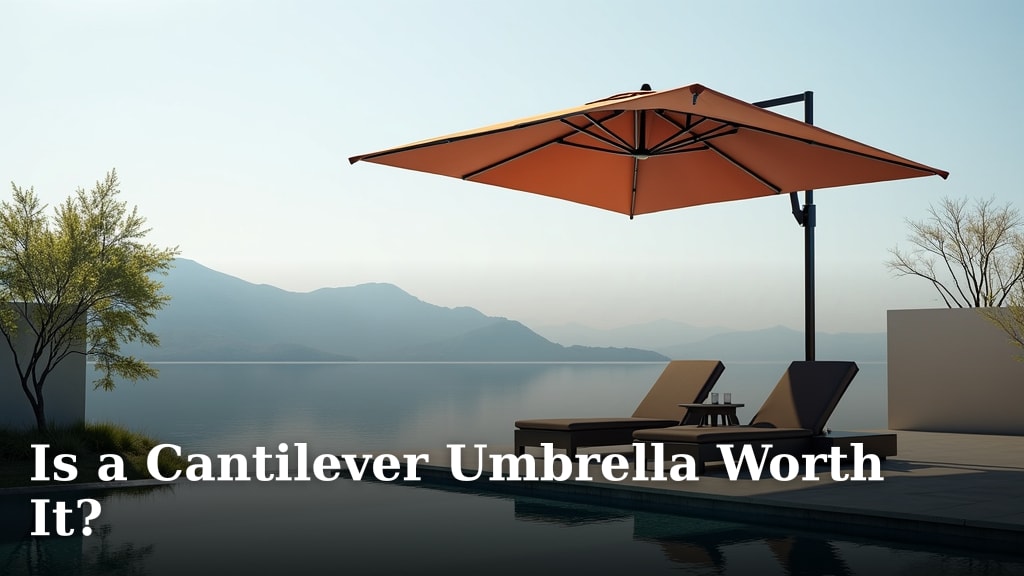
Yes, a cantilever umbrella is absolutely worth it if you want flexible shade and an unobstructed view. These umbrellas offer unique advantages over traditional center-pole designs. Many people find their outdoor living spaces transformed by this choice.
Cantilever umbrellas, also known as offset or side-post umbrellas, provide shade without a pole in the middle of your seating area. This means more room for conversation and furniture arrangements. We found that they are especially useful for larger patios or dining sets.
TL;DR:
- Cantilever umbrellas offer versatile, unobstructed shade.
- They are great for larger patios and outdoor dining.
- You get more flexibility in furniture placement.
- Consider features like tilt, rotation, and base stability.
- The investment pays off in comfort and aesthetics.
So, are you ready to explore why a cantilever umbrella might be your next favorite backyard addition? Let’s break down everything you need to know about making this smart outdoor upgrade.
The Real Value of a Cantilever Umbrella
A cantilever umbrella brings a lot to your outdoor space. It offers more than just shade. You gain freedom in how you arrange your patio.
Unobstructed Views and Flexible Placement
One of the biggest perks is the absence of a central pole. Imagine your dining table without a pole blocking someone’s view or forcing awkward seating. That’s what you get.
This design means the pole sits off to the side. Your entire shaded area becomes usable space. You can place the umbrella next to a lounge set, over a hot tub, or even cover a large outdoor kitchen island.
We found that this flexibility makes a big difference. It allows you to reconfigure your furniture whenever you like, without being limited by a fixed pole.
Superior Shade Coverage and Adjustability
Cantilever umbrellas aren’t just about placement; they’re about smart shade. Many models offer features that help you track the sun throughout the day.
Tilt and Angle Adjustments
Most quality cantilever umbrellas allow you to tilt the canopy. This is super helpful when the sun dips lower in the sky. You can angle the canopy to block those pesky low rays that traditional umbrellas miss.
Some even offer multiple tilt angles. You can create shade exactly where you need it, avoiding squinting or moving your entire setup. Think of it as a personal sun shield for your patio.
360-Degree Rotation
This is where cantilever umbrellas truly shine. Many models can rotate a full 360 degrees around their base. No need to drag a heavy base or reposition furniture.
You can easily swing the canopy from shading your dining area to covering your lounge chairs just a few feet away. This feature makes them incredibly versatile for larger patios with multiple zones.
Comparing Cantilever to Traditional Umbrellas
Let’s look at how these modern umbrellas stack up against their classic counterparts. It helps to see the differences side-by-side.
| Feature | Cantilever Umbrella | Traditional Umbrella |
|---|---|---|
| Pole Placement | Side-mounted, offset | Center-mounted |
| Shade Area | Fully unobstructed | Obstructed by pole |
| Flexibility | High (tilt, rotation) | Low (limited tilt) |
| Ideal Use | Large patios, dining sets, lounge areas, pools | Small tables, limited spaces |
| Footprint | Requires space for base off to the side | Base directly under canopy |
| Cost | Generally higher | Generally lower |
As you can see, the cantilever design prioritizes open space and dynamic shade. Traditional umbrellas are simpler and often more budget-friendly, but they lack that range of motion.
Key Considerations Before Buying
Before you commit, think about a few important things. This helps you pick the right model for your home.
Base Stability is Paramount
Because the canopy extends out, cantilever umbrellas need a very stable base. They are more susceptible to wind than center-pole umbrellas. A heavy, wide base is essential.
Many umbrellas come with a cross-base that needs to be weighted down. You’ll often buy separate paver stones, sandbags, or water/sand-filled bases. Don’t skimp on this. A toppled umbrella can cause damage or injury (Consumer Reports often highlights this point).
Always check the manufacturer’s recommended base weight. It’s usually much heavier than what you’d use for a traditional umbrella.
Size and Coverage Area
Measure your space! A common mistake is getting an umbrella that’s too small or too large. You want the canopy to comfortably cover your seating or dining area.
Consider the sun’s path throughout the day. A larger canopy offers more flexibility as the sun moves. We found that a canopy that extends slightly beyond your furniture provides the best coverage.
Material Quality and Durability
You want your investment to last. Look for robust materials. The frame should be made of aluminum or steel, preferably powder-coated to resist rust.
For the canopy fabric, solution-dyed acrylic is the gold standard. It’s known for its fade resistance and durability against UV rays and mildew. Brands like Sunbrella are popular choices. Polyester with a UV coating is a more budget-friendly option, but may not last as long.
Ease of Operation
How easy is it to open, close, tilt, and rotate the umbrella? Look for smooth crank mechanisms and clearly marked levers or buttons. Some higher-end models even have foot pedals for rotation. You’ll be using these features often, so user-friendliness matters.
Is the Investment Worth It for You?
Cantilever umbrellas generally cost more than their traditional counterparts. This is due to their complex design, heavier bases, and often larger size. So, is that extra cost justified?
If you value an uncluttered outdoor space, desire maximum flexibility in shade placement, and have a larger patio or deck, then yes, it’s very likely worth the investment.
Think about how much you use your outdoor area. If it’s a central part of your home life during warmer months, then enhancing its comfort and usability makes perfect sense. It’s about upgrading your outdoor living experience.
Your Cantilever Umbrella Checklist
Use this quick list to decide if a cantilever umbrella is right for your needs:
- Do you want an unobstructed view and seating area?
- Do you need to shade different spots on your patio throughout the day?
- Is your patio large enough to accommodate the offset base?
- Are you willing to invest in a heavy, stable base?
- Do you prioritize flexibility and modern aesthetics?
- Is your budget a bit more flexible for a premium shade solution?
If you answered yes to most of these, you’re on the right track! Many homeowners find these umbrellas transform their outdoor enjoyment, making them feel like a natural extension of their indoor living space.
Conclusion
Deciding if a cantilever umbrella is worth it comes down to your specific needs and how you envision your outdoor oasis. If you desire an open, flexible space with shade that moves with the sun, the investment truly pays off. You’re not just buying an umbrella; you’re upgrading your entire outdoor living experience with unobstructed views and dynamic coverage. Consider your space, prioritize a stable base, and choose quality materials for lasting enjoyment.
Ready to transform your patio? Take those measurements, review your checklist, and select a cantilever umbrella that perfectly complements your outdoor lifestyle.
Frequently Asked Questions
How much space do I need for a cantilever umbrella?
You’ll need enough room for the canopy to extend over your desired area, plus extra space for the offset base. The base typically sits to the side and often requires a weighted area of about 3×3 feet. Make sure the umbrella’s arm won’t hit walls or other structures when fully extended or rotated.
Are cantilever umbrellas good in windy conditions?
Cantilever umbrellas can be more susceptible to wind due to their offset design. It’s crucial to have a very heavy, stable base and to close the umbrella when not in use or during high winds. Some models offer wind vents in the canopy to help reduce pressure, but no umbrella should be left open in strong gusts.
Can I leave my cantilever umbrella out all year?
While many cantilever umbrellas are built with durable materials, it’s best to protect them during harsh weather seasons. We recommend closing and covering your umbrella with a protective cover when not in use for extended periods. In regions with snow or freezing temperatures, storing it indoors will significantly prolong its lifespan.
What’s the best way to clean a cantilever umbrella canopy?
For most fabric canopies, a gentle cleaning solution of mild soap and water works well. Use a soft brush to scrub away dirt or mildew, then rinse thoroughly with a hose. Allow the canopy to air dry completely before closing it to prevent mildew growth. Always check the manufacturer’s specific cleaning instructions for your model.
Is it difficult to assemble a cantilever umbrella?
Assembly can vary by model, but generally, it involves attaching the pole to the base and then securing the canopy arm. Due to their size and weight, especially the base, it often helps to have a second person for assembly. Many come with clear instructions, and some higher-end models offer white-glove delivery and setup.
