
How to Choose a Patio Umbrella Size?
Selecting the Right Patio Umbrella Dimensions
Choosing the correct patio umbrella size is more than just aesthetics. It’s about ensuring everyone enjoys their time outdoors without battling the sun’s glare. We’ll help you pinpoint the ideal dimensions for your specific needs, making your outdoor space perfectly comfortable.
Measure Your Outdoor Space First
Before you even think about umbrella sizes, you need to know your patio’s limitations. Grab a measuring tape and get ready. This step is critical for avoiding a crowded or awkward setup.
Consider Your Table’s Footprint
The first item on your list is your outdoor dining or seating area. What are its dimensions? A good rule of thumb is to measure the length and width of your table. If it’s round, measure its diameter. We found that most people forget this basic first step (Home & Garden Journal).
Account for Seating and Traffic Flow
Beyond the table, think about the chairs. When pulled out, do they extend past the table’s edge? You’ll need the umbrella canopy to cover both the table and the seated guests. Also, make sure the umbrella doesn’t block any walkways or doors.
The “2-Foot Rule” for Optimal Shade
This is where the magic happens for shade coverage. You want the umbrella canopy to extend at least 2 feet beyond your table’s edge on all sides. This simple rule guarantees everyone seated gets adequate protection from the sun.
For example, if your rectangular table is 6 feet long and 3 feet wide, you’d ideally want an umbrella that covers 10 feet long (6+2+2) and 7 feet wide (3+2+2). But umbrella sizes aren’t usually listed that way. Instead, you’ll look for an umbrella with a canopy diameter or spread that achieves this coverage.
Matching Umbrella Diameter to Table Size
Here’s a quick guide to help you match common table sizes to the appropriate umbrella canopy diameter:
| Table Shape/Size | Recommended Umbrella Diameter | Why It Works |
|---|---|---|
| Small Round (2-3 ft diameter) | 6-7 ft | Covers 2-4 people comfortably. |
| Medium Round (4-5 ft diameter) | 8-9 ft | Ideal for 4-6 diners. |
| Large Round (6-7 ft diameter) | 10-11 ft | Shades 6-8 people with ease. |
| Small Square (3×3 ft) | 7-8 ft | Good for intimate seating. |
| Medium Square (4×4 ft) | 8-9 ft | Excellent for 4-6 people. |
| Small Rectangular (4×6 ft) | 9-10 ft | Covers a standard 6-seater table. |
| Medium Rectangular (5×7 ft) | 10-11 ft | Great for larger family gatherings. |
| Large Rectangular (6×8 ft) | 11-13 ft | Ensures full coverage for big groups. |
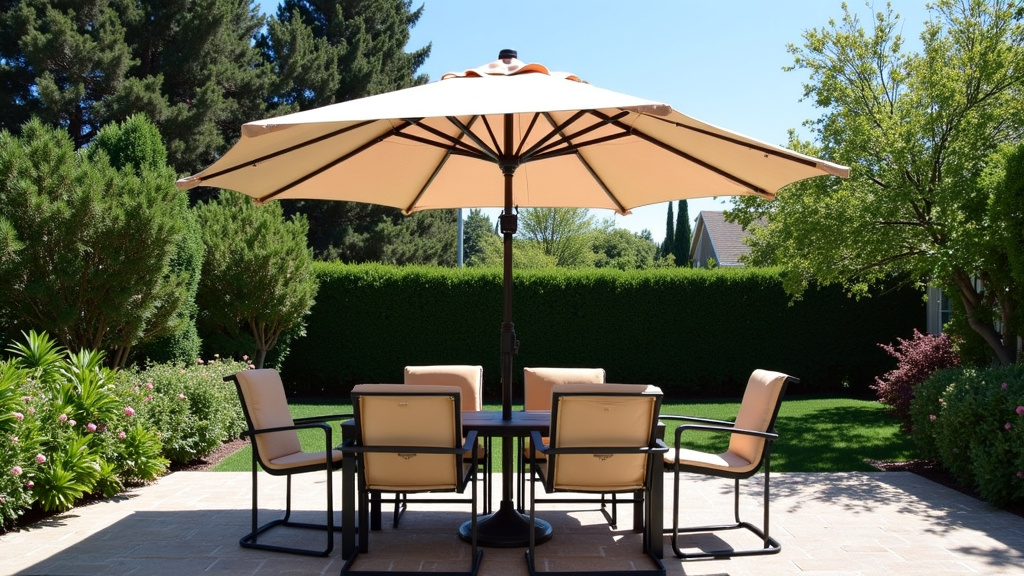
Notice how the umbrella size often sounds larger than the table? That’s because of the 2-foot rule. A 9-foot umbrella, for instance, provides a 4.5-foot radius of shade from its center, which comfortably covers a 5-foot diameter table plus the surrounding chairs.
Understanding Umbrella Shapes and Their Impact
Umbrellas aren’t just round! They come in various shapes, each suited for different table styles. The shape significantly impacts how effectively it shades your space.
Round Umbrellas: The Classic Choice
Most common for round and square tables. A round canopy offers even shade distribution around its center. It’s a versatile option for many patio layouts. Think of it like a sun hat for your table.
Square Umbrellas: A Modern Look
Square umbrellas pair well with square or small rectangular tables. They offer a clean, contemporary look and can provide more precise corner coverage than a round umbrella for square setups. We found these are gaining popularity for their tailored appearance.
Rectangular and Oval Umbrellas: Perfect for Long Tables
If you have a long rectangular or oval dining table, a rectangular or oval umbrella is your best bet. These are designed to provide maximum coverage over an extended surface area, ensuring everyone along the table gets shade. Don’t try to shade a long table with a small round umbrella; you’ll end up with unhappy guests.
Considering Sun Path and Umbrella Functionality
The sun doesn’t stay still, does it? Your umbrella needs to adapt. Think about how the sun moves across your yard throughout the day.
Cantilever vs. Center Pole Umbrellas
Center Pole Umbrellas: These are the traditional choice, with the pole going through a hole in the middle of your table. They’re straightforward and generally more affordable. However, their shade is fixed directly above the table.
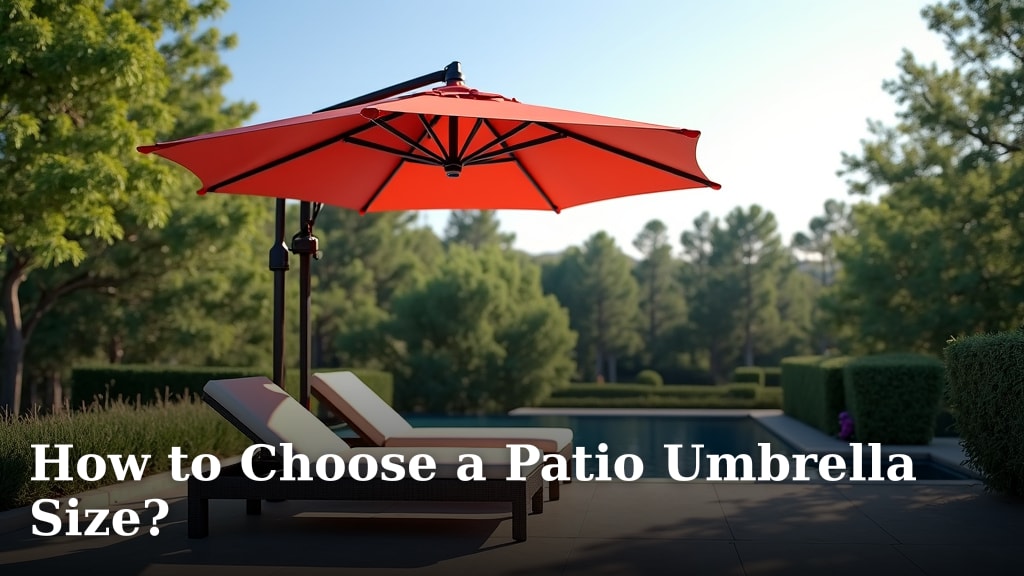
Cantilever (Offset) Umbrellas: These umbrellas have a pole to the side, allowing the canopy to “hang” over your table. This design is fantastic because it allows you to adjust the canopy’s angle and rotation throughout the day to block the moving sun. It’s like having a movable cloud over your seating area. Many find these more flexible and versatile (Consumer Reports).
Tilt and Crank Features
Look for umbrellas with a tilt mechanism. This lets you angle the canopy to block low-lying sun, especially during morning or late afternoon hours. A crank system makes opening and closing the umbrella much easier than a push-up design. These features greatly enhance your umbrella’s usability and the quality of shade it provides. To explore specific models with these features, check out our guide to the best patio umbrellas.
A Checklist for Your Perfect Umbrella Choice
To recap, here’s a quick checklist to guide your decision-making process. Run through these points before you make your final selection.
Have you measured your table’s length and width/diameter?
Did you add 4 feet to your table’s diameter/width for the umbrella canopy size (2 feet on each side)?
Have you accounted for chair space and walkways around your table?
Is the umbrella shape appropriate for your table (e.g., rectangular for long tables)?
Will a tilt or cantilever feature help manage the sun’s movement in your yard?
Does the overall size of the umbrella complement your patio, without overwhelming it?
Answering these questions will help ensure you make a choice you’ll be happy with for years to come. Your outdoor comfort is worth a little planning!
Conclusion
You now have all the tools to select the perfect patio umbrella. By carefully measuring your space and applying the “2-foot rule,” you ensure optimal shade for everyone. Remember to consider the sun’s movement and choose features like tilt or cantilever for maximum flexibility. Your outdoor comfort is important, and a well-chosen umbrella makes all the difference.
Take these steps, measure with confidence, and get ready to enjoy a perfectly shaded outdoor living area. Your next gathering will be cool and comfortable!
Frequently Asked Questions
How do I prevent my patio umbrella from blowing away?
A sturdy umbrella base is essential. For most tables, we recommend a base weighing at least 50 pounds. For larger umbrellas or those in windy areas, consider a base closer to 70-100 pounds, or even an in-ground anchor for cantilever models.
Can I use a patio umbrella without a table?
Absolutely! Many cantilever (offset) umbrellas are designed for standalone use. They are perfect for shading lounge chairs, conversation areas, or even a child’s play space without needing a table in the center.
What’s the best material for a patio umbrella canopy?
For durability and UV protection, look for canopies made from solution-dyed acrylic fabric, like Sunbrella. These materials resist fading, mold, and mildew. Polyester is a good, more affordable option, but may fade quicker over time.
Should my patio umbrella match my outdoor furniture?
While not strictly necessary, coordinating your umbrella’s color and style with your existing furniture creates a cohesive look. We found that choosing a neutral color or one that complements your cushions often works best. It helps create a pulled-together aesthetic.
How high should a patio umbrella be?
The bottom edge of the umbrella canopy should be high enough so that people can comfortably stand and walk underneath without hitting their heads. Generally, aim for a clearance of at least 6.5 to 7 feet from the ground to the lowest point of the canopy when open.
