
Can You Leave a Patio Conversation Set Outside in the Rain?
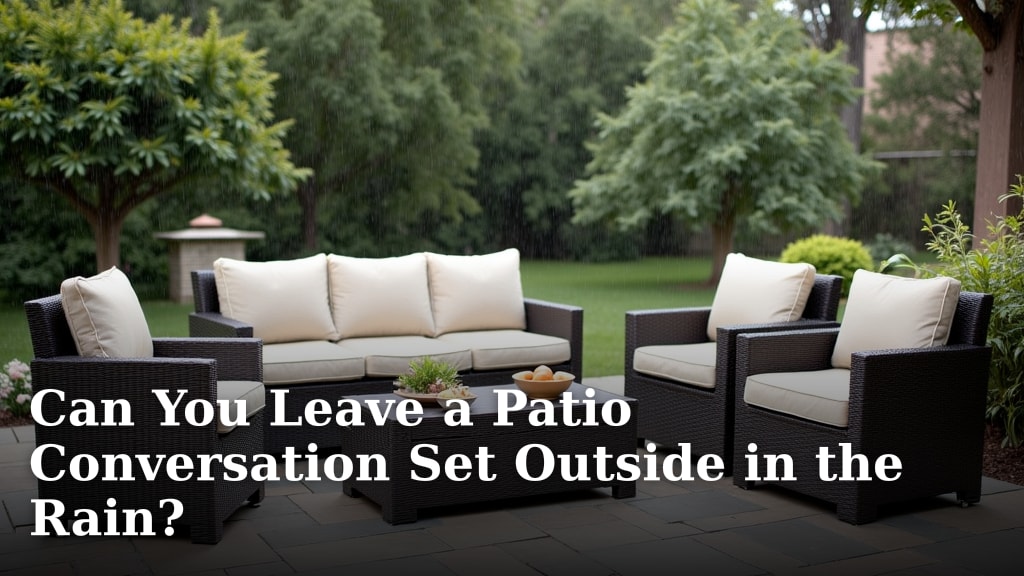
Yes, you can leave a patio conversation set outside in the rain, but how well it handles the moisture depends on its materials and construction. Some materials are naturally more weather-resistant than others, preventing damage from water exposure.
You’ll find that many modern patio sets are designed with outdoor living in mind. They often feature fabrics and frames that resist rust, mildew, and water absorption. Understanding these material differences is key to keeping your set looking great.
- Most patio sets can handle some rain.
- Materials like aluminum and synthetic wicker are best.
- Cushions often need special care or storage.
- Proper covers can protect your furniture.
- Drying practices extend furniture life.
Let’s walk through everything you need to know about protecting your patio conversation set from the elements, ensuring it lasts for years to come.
Understanding Your Patio Set’s Rain Readiness
Leaving your patio conversation set out in the rain is often convenient, but how well it fares truly boils down to its components. Think of it like a superhero team; each member has different strengths against the elements. We’re going to break down which materials are your set’s best defense against a downpour and which ones might need a little extra TLC.
Frame Materials: The Backbone of Durability
The frame is the skeleton of your furniture. Its material largely dictates how resistant your set will be to rust, warping, and general wear and tear from moisture.
Aluminum: The Lightweight Champion
Many experts agree that aluminum is an excellent choice for outdoor furniture frames (Consumer Reports). Why? It’s naturally rust-resistant. You won’t find it corroding even after repeated exposure to rain. It’s also lightweight, making it easy to move around if you need to.
- Won’t rust, even in humid climates.
- Lightweight and easy to rearrange.
- Often comes with a powder-coated finish for extra protection.
Steel and Wrought Iron: Strength with a Catch
Steel and wrought iron frames are incredibly strong and sturdy. They offer a substantial feel and can withstand strong winds. However, these materials are prone to rust if not properly treated or maintained. Look for sets with a rust-resistant coating or consider using protective covers.
- Very durable and stable.
- Can be heavy, making them harder to move.
- Requires rust-resistant finishes to withstand rain.
Wood: Natural Beauty, Specific Needs
Wooden patio sets, like those made from teak, cedar, or eucalyptus, offer a classic, natural look. Some woods are naturally more weather-resistant than others due to their oil content. Teak, for instance, is highly prized for its natural oils that repel water and resist rot (Forest Products Laboratory). Other woods may require more frequent sealing or treatment to prevent water damage, cracking, or mildew.
- Teak and cedar are naturally resistant to moisture.
- Other woods need regular sealing or painting.
- Can develop mildew if not allowed to dry properly.
Wicker (Synthetic vs. Natural): What’s the Difference?
When we talk about wicker patio sets, we’re usually talking about synthetic wicker. Natural wicker, made from rattan or bamboo, is not designed for rain. It can absorb water, swell, and eventually break down. Synthetic wicker, often made from resin or PVC, is a different story.
- Synthetic wicker is highly water-resistant and durable.
- Natural wicker should be protected from rain.
- Easy to clean and maintain.
Cushions and Fabric: The Soft Side of the Story
Your cushions are perhaps the most vulnerable part of your conversation set when it comes to rain. They can absorb water, leading to mold, mildew, and unpleasant odors if not managed correctly.
Water-Resistant vs. Waterproof Fabrics
It’s important to know the difference. Water-resistant fabrics repel water to a certain extent, meaning water beads up and rolls off initially. Given enough time or heavy rain, they can still become saturated. Waterproof fabrics, on the other hand, prevent water from passing through entirely. Many outdoor cushions use water-resistant materials like solution-dyed acrylic, such as Sunbrella fabrics, which are known for their durability and fade resistance.
- Most outdoor fabrics are water-resistant, not fully waterproof.
- Look for fabrics that dry quickly.
- Solution-dyed acrylics resist fading and mildew.
Foam Fillings: The Inner Battle
The type of foam inside your cushions matters too. Open-cell foam allows water to pass through and drain, making it a better choice for outdoor use than traditional indoor foam, which acts like a sponge. Even with open-cell foam, cushions need to dry thoroughly to prevent mildew.
- Open-cell foam dries faster and helps prevent mildew.
- Regular foam can hold water, leading to problems.
- Ensure cushions are tilted to drain water.
Best Practices for Rain-Proofing Your Set
Even the most weather-resistant furniture benefits from a little care. Proactive measures can significantly extend the life and beauty of your patio set.
The Power of Patio Covers
A good patio furniture cover is like an umbrella for your entire set. It protects against rain, sun, dust, and even pollen. When choosing a cover, look for one that is waterproof and breathable to prevent moisture buildup underneath. Many sources recommend covers made from materials like polyester or vinyl with taped seams for maximum protection.
- Invest in high-quality, waterproof covers.
- Ensure covers are breathable to prevent condensation.
- Secure covers properly to prevent them from blowing off.
Quick-Drying Techniques
After a rain shower, a little effort goes a long way. If your cushions got wet, stand them on their sides to allow water to drain and air to circulate. You can also pat them down with a dry towel. For frames, a quick wipe-down can prevent water spots or rust from forming on vulnerable areas. Prompt drying is crucial for preventing mildew growth.
- Tilt cushions on their sides for faster drying.
- Wipe down frames to prevent water spots and rust.
- Ensure good air circulation around wet items.
Seasonal Storage Considerations
If you live in an area with harsh winters or extended rainy seasons, consider storing your patio set, or at least the cushions, indoors. A garage, shed, or even a covered porch can provide excellent protection. This simple step can prevent significant wear and tear and keep your set looking new for years.
- Store cushions indoors during prolonged wet periods.
- Consider storing entire sets in extreme weather.
- Clean furniture thoroughly before storing.
Comparing Material Resilience to Rain
To give you a quick overview, here’s a table summarizing how different patio conversation set materials generally hold up against rain. Remember, individual product quality can vary, so always check manufacturer specifications.
| Material Type | Rain Resistance | Notes on Maintenance |
|---|---|---|
| Aluminum | Excellent | Virtually rust-proof, low maintenance. |
| Steel/Wrought Iron | Good (if treated) | Requires rust-resistant coating; prone to rust if coating fails. |
| Teak Wood | Very Good | Naturally resistant to rot and insects; can silver with age. |
| Other Wood (e.g., Pine) | Fair to Good | Needs regular sealing/painting; susceptible to rot/mildew. |
| Synthetic Wicker | Excellent | Water-resistant, easy to clean, UV resistant. |
| Natural Wicker | Poor | Not suitable for outdoor rain exposure; will degrade. |
| Outdoor Fabrics (e.g., Sunbrella) | Good (water-resistant) | Dries quickly, resists mildew; not fully waterproof. |
Checklist for Rain-Ready Patio Furniture
Before a storm rolls in, or as you’re shopping for a new set, use this quick checklist to ensure your patio conversation set is ready to face the rain:
- Are the frame materials inherently rust-resistant (like aluminum)?
- Do wooden frames have a protective sealant or are they naturally water-repellent?
- Are cushions made with water-resistant fabric and quick-drying foam?
- Do you have waterproof covers specifically designed for your furniture?
- Is there a shaded or covered area where cushions can dry thoroughly?
Conclusion
You now know that leaving your patio conversation set outside in the rain is totally doable with the right materials and care. Focus on frames like aluminum or synthetic wicker, and look for cushions with water-resistant fabrics and quick-drying foam. Remember, a little prevention goes a long way.
Investing in good covers and practicing simple drying techniques will keep your set looking new. By understanding your furniture’s components and following these easy tips, you’ll ensure your outdoor oasis remains beautiful and comfortable for many seasons to come. Go enjoy your patio, rain or shine!
Frequently Asked Questions
Should I bring my patio cushions inside every time it rains?
It’s a good practice, especially during heavy or prolonged rain, or if your cushions aren’t made with highly water-resistant fabrics and open-cell foam. Bringing them in prevents saturation and helps avoid mold or mildew. If you can’t bring them inside, a high-quality cover is your next best option.
How do I prevent mildew on my outdoor furniture?
Mildew thrives in damp conditions. To prevent it, ensure your furniture, especially cushions, dries completely after rain. Tilt cushions to help water drain, and consider using breathable, waterproof covers. Regularly cleaning your furniture with a mild soap and water solution can also help.
Can direct sunlight damage my patio set as much as rain?
Yes, prolonged direct sunlight can cause significant damage. UV rays can fade fabrics, dry out natural wood, and even degrade some plastics over time. Look for furniture with UV-resistant materials and consider using covers or placing your set in a shaded area to extend its life.
What’s the best way to clean my patio furniture after it’s been rained on?
After rain, a simple wipe-down with a dry cloth can remove standing water and prevent water spots. For general cleaning, use a soft brush or cloth with mild soap and water. Rinse thoroughly and allow everything to air dry completely, especially cushions, to prevent residue buildup or mildew.
Is “weather-resistant” the same as “waterproof” for patio furniture?
No, they are different. “Weather-resistant” means the material can withstand various weather conditions, including some rain, without significant damage. “Waterproof” means it completely prevents water penetration. Most outdoor furniture fabrics are water-resistant, meaning they repel water to a degree but can still get saturated in heavy rain.
